Sundarban Luxury Tour with a Private Naturalist: A More Personalised Safari Experience
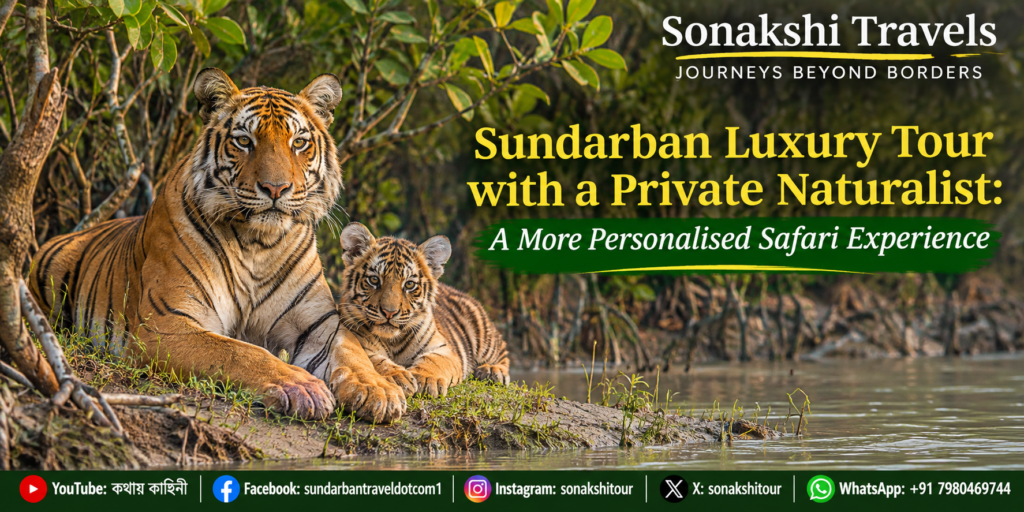
A Sundarban luxury tour with a private naturalist offers something that comfortable accommodation and an exclusive boat alone cannot provide: a more meaningful understanding of the extraordinary mangrove wilderness. Instead of simply travelling past forests and searching for wildlife, visitors can explore the relationships between tidal rivers, mangrove vegetation, birds, reptiles and the elusive Royal Bengal Tiger. On a well-planned Sundarban Tour Private Wildlife Safari, a knowledgeable naturalist can explain animal behaviour, identify interesting species and adapt conversations to individual interests. This personalised approach is particularly valuable for international travellers, wildlife photographers, birdwatchers and families who want their Sundarban journey to be educational as well as comfortable.
The Sundarbans are not a conventional wildlife destination. Much of the landscape is accessible to tourists only through regulated river routes, and animals may remain concealed behind dense mangrove vegetation. A private naturalist cannot guarantee sightings or take guests into restricted forest areas. What a skilled naturalist can do is help visitors interpret the signs that might otherwise go unnoticed, explain why particular species use certain habitats and make every hour of observation more informative.
However, travellers should understand the difference between a private naturalist, an authorised forest ecotourism guide and a tour manager. These roles may complement one another, but they are not automatically interchangeable. This guide explains what a naturalist does during a private Sundarban safari, how personalised interpretation improves wildlife observation, which travellers benefit most, what qualifications to look for and how to choose an appropriate package without confusing premium service with unrestricted access to protected wildlife habitats.
What Is a Private Naturalist on a Sundarban Luxury Tour?
A private naturalist is a person engaged to help travellers understand the natural environment through observation, species identification and ecological interpretation. On a Sundarban safari, this may involve explaining the behaviour of spotted deer, recognising kingfishers and other birds, describing mangrove adaptations, discussing tidal influences and helping guests understand the relationships between predators, prey and their habitat.
Unlike a general sightseeing commentary that follows a fixed sequence, personalised interpretation can respond to the particular interests of the travellers. A professional wildlife photographer may want explanations of animal movement and feeding behaviour. A family may prefer simple discussions about forest food chains. An international visitor might be interested in how tidal flooding influences the entire ecosystem.
Importantly, the term “private naturalist” does not by itself establish any official forest authorisation, academic qualification or professional certification. Different operators may use the term for people with varying training and experience. Travellers should therefore ask about the person’s knowledge, communication skills, field experience and responsibilities rather than assuming that every naturalist offers the same standard of service.
A naturalist is more than a wildlife spotter
Spotting a bird or animal is only the beginning of meaningful wildlife interpretation. A good naturalist helps visitors understand why a species is present, what it is doing and how it interacts with the surrounding environment. For example, identifying a brown-winged kingfisher is useful, but explaining its association with mangrove waterways and its hunting behaviour offers a richer understanding of the bird.
Similarly, watching a herd of spotted deer near a riverbank becomes more interesting when travellers learn about feeding patterns, vigilance and the role of deer in the Sundarbans’ predator-prey relationships. These explanations turn individual sightings into opportunities to understand the ecosystem.

Personal attention is the principal advantage
A private arrangement allows guests to ask questions at their own pace without competing for attention with a large mixed group. The naturalist can explain unfamiliar subjects in greater detail, revisit an earlier observation or concentrate on a particular family of birds when that is what the travellers find most interesting.
This does not mean every moment must be filled with commentary. Quiet observation is often essential during a wildlife safari. A capable naturalist recognises when explanation adds value and when silence allows guests to appreciate the natural environment.
Private Naturalist, Forest Guide and Tour Manager: Understanding the Difference
One of the most important distinctions concerns the official forest ecotourism guide. The Sundarban Tiger Reserve states that tourist boats entering the reserve must be accompanied by an ecotourism guide. Its published rules describe responsibilities relating to visitor conduct, safety, forest regulations and explaining the local ecology.
A privately arranged naturalist may provide additional specialised commentary and more individual attention. Unless that person is separately authorised to fulfil the forest guide role, the naturalist should not be represented as a substitute for the required ecotourism guide.
| Service Role | Primary Responsibility | Value to Travellers |
|---|---|---|
| Authorised Forest Ecotourism Guide | Guide tourists in accordance with forest rules and explain relevant environmental and local information. | Provides required guiding support within regulated tourism areas. |
| Private Naturalist | Offer additional wildlife interpretation, species identification and personalised ecological explanations. | Creates a more focused learning and observation experience. |
| Private Tour Manager | Coordinate transfers, boat operations, accommodation, meals and the planned itinerary. | Reduces logistical difficulties and supports travel arrangements. |
In some circumstances, one individual may possess the experience and authorisation needed to perform more than one role. However, this should be established explicitly before booking. A quotation should identify whether the naturalist is additional to the required forest guide and how the services will operate during the safari.
How a Private Naturalist Enriches Wildlife Observation
The Sundarbans reward patient observation, but the landscape can be difficult for newcomers to interpret. The forest edge often appears visually uniform until somebody explains what to look for. A naturalist can help travellers distinguish meaningful animal activity from ordinary movement caused by wind, water or vegetation.
Understanding signs of animal activity
Experienced observers pay attention to exposed mudbanks, creek entrances, vegetation edges and animal behaviour. Tracks visible on soft mud may suggest that an animal has recently passed through an area, although reliable identification depends on the quality of the impression and the observer’s expertise.
A naturalist may also discuss why deer become alert, how macaques communicate or why particular birds remain perched above the water. These observations can encourage travellers to look beyond the most obvious animal in the scene.
Nevertheless, naturalists should avoid declaring that a tiger is nearby simply because a deer appears nervous or a bird makes an alarm call. Wildlife behaviour can have multiple explanations, and responsible interpretation acknowledges uncertainty.
Learning why animals use different habitats
Different species occupy different parts of the mangrove environment. Spotted deer may use forest margins and suitable feeding areas. Kingfishers often perch near waterways. Crocodiles may rest on exposed banks, while water monitors move between mud, vegetation and water.
A skilled naturalist connects these observations with food availability, shelter, predation and the changing tidal environment. This helps guests recognise that wildlife is not distributed randomly throughout the forest.
Improving observation without disturbing wildlife
A private naturalist can recommend binocular use, explain where to scan from an authorised boat and help guests recognise species from a responsible distance. The objective should be clearer observation rather than approaching animals too closely.
The naturalist must work within the instructions of the authorised guide and boat crew. A good observation opportunity is never a justification for entering prohibited channels, approaching crocodiles dangerously or pursuing a tiger for a photograph.
Birdwatching with a Private Sundarban Naturalist
Birdwatching is one of the strongest reasons to consider specialist naturalist assistance in the Sundarbans. The waterways support kingfishers, raptors, herons, cormorants and numerous other resident and seasonal birds. Many are small, distant or partly concealed, making knowledgeable identification particularly valuable.
Recognising different kingfishers
The Sundarbans are particularly interesting for kingfisher enthusiasts. Species associated with the wider region include the brown-winged kingfisher, common kingfisher, white-throated kingfisher, black-capped kingfisher, collared kingfisher, pied kingfisher and stork-billed kingfisher.
A naturalist can explain differences in size, bill shape, plumage and hunting style. For example, the pied kingfisher is known for hovering above water before diving for fish, while several other kingfishers frequently watch from branches.
This type of interpretation is especially useful when birds are encountered briefly. Instead of receiving an uncertain identification based solely on colour, travellers learn which characteristics distinguish one species from another.
Interpreting raptors and waterbirds
Larger birds can also provide memorable encounters. Ospreys may search waterways for fish, while Brahminy kites and white-bellied sea eagles use coastal and river environments. Herons and other wading birds often remain remarkably still while hunting.
A naturalist may help travellers recognise differences in flight silhouette, plumage, bill shape and feeding behaviour. For photographers, this knowledge can be more useful than simply being told a bird’s name after it has flown away.
Adapting interpretation to beginners and enthusiasts
Beginners may prefer a clear introduction to common bird families and practical binocular techniques. Experienced birdwatchers may want more detailed discussion of identification features, seasonal occurrence and habitat preferences.
The value of private attention is that explanations can match the guests’ knowledge without making either group feel hurried. Bird sightings remain subject to natural conditions, however, and no guide can responsibly promise a complete species checklist.
Understanding Mangrove Ecology Through Expert Interpretation
The Sundarbans are a fascinating example of how plants and animals adapt to tidal conditions. UNESCO recognises the Indian Sundarbans for their exceptional mangrove ecosystem, waterways and ecological processes. A naturalist can help travellers appreciate these features as connected parts of the landscape rather than simply describing the forest as dense greenery.
Why mangrove roots look unusual
Many mangrove species possess specialised root structures that help them survive in waterlogged, oxygen-poor soil. Some produce upright breathing roots, while others develop different supporting or spreading root systems.
A naturalist can explain these adaptations when suitable plants are visible from authorised visitor areas or waterways. Rather than treating every exposed root as identical, guests can begin recognising the structural differences that make mangrove forests distinctive.
Recognising important mangrove plants
Plants associated with the Sundarbans include Sundari, Gewa or Genwa, Goran, Keora and Golpata. Their leaves, branching forms, habitats and adaptations differ. Accurate identification requires attention to several botanical features, particularly when viewing plants from a moving boat.
An informed naturalist can discuss how these plants cope with salinity, tidal inundation and unstable sediment. The most helpful interpretation explains visible characteristics without inventing identifications when the view is insufficient.
How tides shape the safari environment
Tidal fluctuations change how much muddy shoreline is exposed and influence the appearance of channels and creek margins. At lower water levels, visitors may notice additional mudflats, roots and animal tracks. Higher water can conceal these features and alter the visible relationship between land and river.
A naturalist can interpret these changes, helping travellers understand why the same stretch of river may look different at different times. However, tide should not be treated as a reliable formula for predicting the appearance of particular animals.
Why International Travellers May Benefit from a Private Naturalist
For international visitors unfamiliar with Indian mangrove ecosystems, an English-speaking naturalist can make wildlife interpretation considerably more accessible. The advantage is not simply translation. A good interpreter can explain unfamiliar plant adaptations, compare wildlife behaviour with other destinations and respond to detailed questions in language that visitors understand comfortably.
Sonakshi Travels states that English-speaking guide or naturalist arrangements can be requested for private tours, subject to availability. Travellers should communicate language requirements before confirming the itinerary rather than assuming that every authorised forest guide will provide specialist interpretation in their preferred language.
Clear communication improves the learning experience
A naturalist who communicates confidently can explain ecological ideas without unnecessarily technical vocabulary. This is particularly helpful when discussing mangrove salinity, tidal movement, animal territories or the differences between species that initially appear similar.
Travellers can ask follow-up questions and develop a deeper understanding of what they are observing. However, the ability to speak English should not be confused with scientific training. It is sensible to enquire separately about language proficiency, regional field experience and natural-history knowledge.
A more individually paced safari
International guests often have limited time in West Bengal and may wish to concentrate on the subjects that motivated their journey. A private naturalist can help tailor explanations to interests such as wildlife photography, birdwatching, mangrove ecology or conservation.
A private itinerary can also allow a more relaxed observation experience, provided all movements remain within permitted routes and operating requirements. The naturalist cannot override forest rules, tidal conditions or the practical decisions of the boat crew.
Travellers comparing a Sundarban luxury tour package should request clear information about whether a dedicated naturalist is included, whether English-language assistance is available and how many safari days the arrangement covers.
Private Naturalists for Wildlife Photography and Special-Interest Safaris
Wildlife photography requires more than a technically capable camera. Understanding species behaviour, natural light and habitat can help photographers prepare for encounters without disturbing animals. A naturalist with relevant field experience may offer useful support during these activities.
Understanding behaviour before photographing
Birds and mammals often provide subtle behavioural indications before changing position. A perched bird may become more alert before flying, while feeding animals may periodically pause to inspect their surroundings. Recognising such patterns can help photographers remain ready rather than reacting only after movement begins.
Nevertheless, animal behaviour cannot be predicted precisely. A naturalist should discuss possible behaviour without promising that a bird will dive or a tiger will cross a river at a particular moment.
Making better use of observation time
In photography-focused trips, guests may prefer extended observation of a suitable riverbank or bird perch instead of a hurried schedule. A private naturalist can communicate those preferences to the tour team, subject to the authorised route and practical conditions.
Photographers should clarify whether their naturalist is primarily an ecological interpreter or also has experience supporting wildlife photography. These are related but distinct skills. Knowledge of animal identification does not automatically imply proficiency with camera equipment or photographic composition.
Ethical photography remains essential
No photograph justifies pursuing an animal, disturbing a nesting bird or entering prohibited waterways. A responsible naturalist should support quiet observation and respect all applicable forest rules. Guests should also follow any official restrictions concerning equipment and activities within the reserve.
For travellers interested in a wildlife-centred itinerary, a private luxury Sundarban safari arrangement can be compared on the basis of observation time, professional support and boat suitability rather than accommodation alone.
Choosing the Right Private Naturalist: What to Check Before Booking
The effectiveness of a naturalist-led safari depends heavily on the individual providing the service. A polished brochure may promise expert wildlife interpretation, but travellers should ask practical questions that reveal exactly what is included.
A suitable naturalist should demonstrate knowledge of the Indian Sundarbans rather than relying entirely on general wildlife information. Familiarity with mangrove vegetation, locally occurring birds, tidal environments, animal behaviour and responsible tourism is particularly valuable.
Essential questions for the tour operator
- Is the naturalist dedicated to our group? Confirm whether the person is exclusively assigned or shared with other travellers.
- What is the naturalist’s experience? Ask about work in the Sundarbans, bird identification and mangrove ecology.
- Is an authorised forest guide arranged separately? Confirm compliance with current reserve requirements.
- Which languages can the naturalist communicate in? Request English-speaking assistance in advance if needed.
- Which days include naturalist services? Check whether the person accompanies every safari day or only selected excursions.
- Is specialist photography assistance included? Distinguish wildlife interpretation from camera instruction.
- What happens if the assigned naturalist becomes unavailable? Clarify substitution arrangements before travel.
The answers should appear in the final quotation or booking confirmation where practical. A clearly specified service is more dependable than a broad promise of an “expert guide” without any explanation of responsibilities.
How to assess value rather than price alone
The cost of specialist assistance may depend on the naturalist’s experience, the number of days, language requirements, the size of the private group and whether additional arrangements are necessary. No universal rate should be assumed without a quotation.
A more expensive naturalist is not automatically better. Travellers should consider whether the person’s knowledge matches their interests, whether they can communicate effectively and whether the safari provides enough observation time to benefit from the expertise.
The Sonakshi Travels private luxury Sundarban package provides a starting point for discussing private boat arrangements, guided safaris and the possibility of more personalised natural-history interpretation. The precise naturalist arrangement should be confirmed for the chosen dates and package.
Planning a Two-Day or Three-Day Naturalist-Led Safari
A private naturalist can add value to a short visit, but the educational experience often becomes richer when travellers have sufficient time to observe different habitats and revisit subjects introduced earlier in the journey.
For example, an initial excursion may introduce the mangrove ecosystem, common riverbank birds and basic observation techniques. A subsequent wildlife day can provide opportunities to examine animal behaviour, compare habitats and discuss conservation in greater depth.
| Tour Format | Naturalist Experience | Most Suitable For |
|---|---|---|
| 1 Night / 2 Days | An introduction to wildlife identification and mangrove ecology during the available safari periods. | Travellers with limited time or first-time visitors. |
| 2 Nights / 3 Days | More time for interpretation, birdwatching and observation across different permitted areas. | Nature enthusiasts, families and international visitors. |
| 3 Nights / 4 Days or Longer | A slower programme with scope for focused natural-history discussions and extended wildlife observation. | Dedicated birdwatchers, wildlife photographers and specialist travellers. |
These are illustrative planning formats rather than fixed safari schedules. The number of actual forest-safari days may differ from the number of hotel nights. Entry permissions, designated routes, weather, operating restrictions and boat arrangements determine what can be undertaken.
Travellers should also understand that more time in the forest increases opportunities for observation but does not guarantee a tiger or any other particular animal. A naturalist’s role is to improve the quality of interpretation during the time available.
For a broader overview of the safari experience, including the relationship between comfortable river cruising and responsible wildlife travel, consult the Sundarban Luxury Tour Wildlife Safari Guide: Exploring the Mangrove Wilderness in Comfort.
Frequently Asked Questions About Private Sundarban Naturalists
Is a private naturalist different from a government-authorised forest guide?
Yes, the roles can be different. The Sundarban Tiger Reserve requires an ecotourism guide on tourist boats entering the reserve. A private naturalist may provide additional specialised interpretation and personalised attention. Unless appropriately authorised, a private naturalist does not replace the required forest guide.
Can I request an English-speaking naturalist for my Sundarban luxury tour?
English-speaking naturalist assistance can be requested through operators such as Sonakshi Travels. Availability depends on the selected dates and arrangements. Travellers should confirm the preferred language, relevant experience and number of service days before making the final booking.
Will a private naturalist increase my chances of seeing a Royal Bengal Tiger?
A knowledgeable naturalist may help travellers recognise habitats, understand signs of activity and observe more carefully. However, there is no responsible basis for promising a particular increase in tiger-sighting probability. Tiger movements remain unpredictable, and observation is limited to permitted tourism areas.
Is a private naturalist useful for birdwatching?
Yes, particularly when the person has strong local bird-identification experience. A naturalist can explain differences between similar kingfishers, identify raptors and waterbirds, and interpret feeding behaviour. Travellers with specialist interests should ask specifically about birdwatching expertise.
Is the private naturalist included in every luxury package?
Not necessarily. Package inclusions differ between operators and individual quotations. Some arrangements may include a dedicated naturalist, while others provide the required forest guide with optional specialist assistance. The service should be confirmed explicitly rather than assumed from the word “luxury”.
Can a private naturalist arrange access to restricted forest areas?
No. Private naturalist services do not override forest department rules, prescribed boat routes or protected-area restrictions. Wildlife observation must remain within authorised areas and comply with the instructions of forest personnel and the boat crew.
A More Meaningful Sundarban Safari Through Personalised Interpretation
A Sundarban luxury tour with a private naturalist offers a distinctive form of premium travel: the opportunity to understand the mangrove wilderness through informed, individual attention. From recognising unfamiliar birds to interpreting deer behaviour and explaining specialised mangrove roots, a capable naturalist can turn ordinary observations into a richer appreciation of the ecosystem.
The most important benefits are knowledgeable explanation, flexible communication and an experience adapted to the interests of the travellers. These advantages should not be confused with guaranteed wildlife sightings, unrestricted forest access or the responsibilities of authorised ecotourism guides.
When planning a Sundarban Tour Private Wildlife Safari, consider the naturalist’s experience, preferred language, actual days of service and the amount of time allocated to wildlife observation. Sonakshi Travels can discuss personalised private touring arrangements through its official Sundarban tour website, with specialist services subject to confirmation. The right naturalist can help make a visit memorable not simply for what you see, but for how much you come to understand.
Explore Our Latest and Updated Travel Guides
-
Luxury Sundarban Private Tour Cost: What Do You Get for the Higher Price?
Luxury Sundarban Private Tour Cost: What Do You Get for the Higher Price? Luxury in the Sundarbans has a rather different meaning from luxury in a metropolitan hotel or an international beach resort. It is expressed through the freedom to explore a magnificent tidal wilderness with your chosen companions, the comfort of returning to carefully selected accommodation and the reassurance that every important aspect of…
-
What Does Luxury Mean in the Sundarbans? Beyond Five-Star Rooms and Expensive Cars
What Does Luxury Mean in the Sundarbans? Beyond Five-Star Rooms and Expensive Cars At first glance, luxury travel appears easy to define. A sophisticated hotel, an expensive vehicle, beautifully presented meals and attentive hospitality are familiar indicators of a premium holiday. Yet a Sundarban luxury tour invites travellers to reconsider these conventional measures of indulgence. In a destination where tidal rivers determine the rhythm of…
-
Why True Sundarban Luxury Is Space, Time and Personal Attention
Why True Sundarban Luxury Is Space, Time and Personal Attention There is a particular kind of luxury that cannot be adequately described through the photographs of an expensive hotel room. It is experienced in the quiet moments of a journey, when there is no need to hurry, no competition for a comfortable seat and no obligation to adjust every personal preference to the expectations of…
-
How to Choose a Genuine Sundarban Private Tour Operator: 15 Questions to Ask Before Booking
How to Choose a Genuine Sundarban Private Tour Operator: 15 Questions to Ask Before Booking Choosing a genuine Sundarban private tour operator is one of the most important decisions you will make before exploring India's remarkable mangrove wilderness. A beautifully designed website may promise an exclusive boat, comfortable accommodation, experienced naturalists and unforgettable wildlife encounters. Yet these attractive descriptions do not always explain how the…
-
Sundarban Luxury Tour Crocodile and Deer Spotting: Beyond the Famous Bengal Tiger
Sundarban Luxury Tour Crocodile and Deer Spotting: Beyond the Famous Bengal Tiger A Royal Bengal Tiger may be the most celebrated animal of the Indian Sundarbans, but two other remarkable inhabitants often make a wildlife safari equally fascinating: the saltwater crocodile and the spotted deer. Crocodiles may rest almost motionless on exposed tidal mudbanks, while groups of chital deer feed along mangrove margins or emerge…
-
Sundarban Luxury Tour Full-Day Jungle Safari: What Happens from Morning to Evening?
Sundarban Luxury Tour Full-Day Jungle Safari: What Happens from Morning to Evening? A full-day jungle safari in the Indian Sundarbans is an experience shaped by tidal rivers, dense mangrove forests, changing wildlife activity and the quiet rhythm of travelling by boat. Unlike conventional jeep safaris, visitors explore the protected landscape through authorised waterways, observing forest banks and stopping at designated tourism facilities where permitted. A…
-
Sundarban Luxury Tour Morning Safari Experience: Light, Wildlife and River Landscapes
Sundarban Luxury Tour Morning Safari Experience: Light, Wildlife and River Landscapes Morning brings a distinctive atmosphere to the mangrove waterways of the Indian Sundarbans. Soft daylight gradually reveals the forest margins, reflections move across tidal rivers, and the sounds of birds become part of the experience of travelling through this remarkable landscape. For visitors planning a Sundarban Tour Private Wildlife Safari, a well-organised morning excursion…
-
Sundarban Luxury Tour Safari Safety: Understanding Wildlife Rules and Responsible Travel
Sundarban Luxury Tour Safari Safety: Understanding Wildlife Rules and Responsible Travel Safety is an essential part of experiencing the wild mangrove waterways of the Indian Sundarbans. A luxury safari may provide a comfortable private boat, experienced service team and personalised wildlife interpretation, but these advantages must operate within the safety requirements and conservation regulations established for the protected forest. Travellers booking a Sundarban Tour Private…
-
Sundarban Luxury Tour Watchtower Guide: Sajnekhali, Sudhanyakhali and Dobanki
Sundarban Luxury Tour Watchtower Guide: Sajnekhali, Sudhanyakhali and Dobanki The watchtowers of Sajnekhali, Sudhanyakhali and Dobanki offer three different ways to experience the remarkable mangrove landscape of the Indian Sundarbans. Sajnekhali introduces travellers to the forest through wildlife interpretation and designated observation facilities, Sudhanyakhali provides views towards a freshwater pond and surrounding mangrove habitat, while Dobanki is particularly recognised for its elevated canopy walkway. For…
-
Sundarban Luxury Tour Safari Permits: Entry Rules, Guides and Boat Requirements
Sundarban Luxury Tour Safari Permits: Entry Rules, Guides and Boat Requirements Planning a private wildlife safari in the Indian Sundarbans involves more than selecting a comfortable boat and arranging accommodation. Every legitimate journey into the protected tourism areas must respect forest entry permissions, authorised guides, boat registration requirements and conservation regulations. These arrangements are particularly important for travellers booking a Sundarban Tour Private Wildlife Safari,…
Turn Your Sundarban Plans into a Personalised Quotation
Tell Sonakshi Travels who is travelling and what you have in mind. Request availability, suitable stay options, and a clear package price for your party.
Prefer to speak directly? WhatsApp +91 7980469744 or call Sonakshi Travels.