Sundarban Luxury Tour for Families: Planning a Comfortable Wildlife Holiday
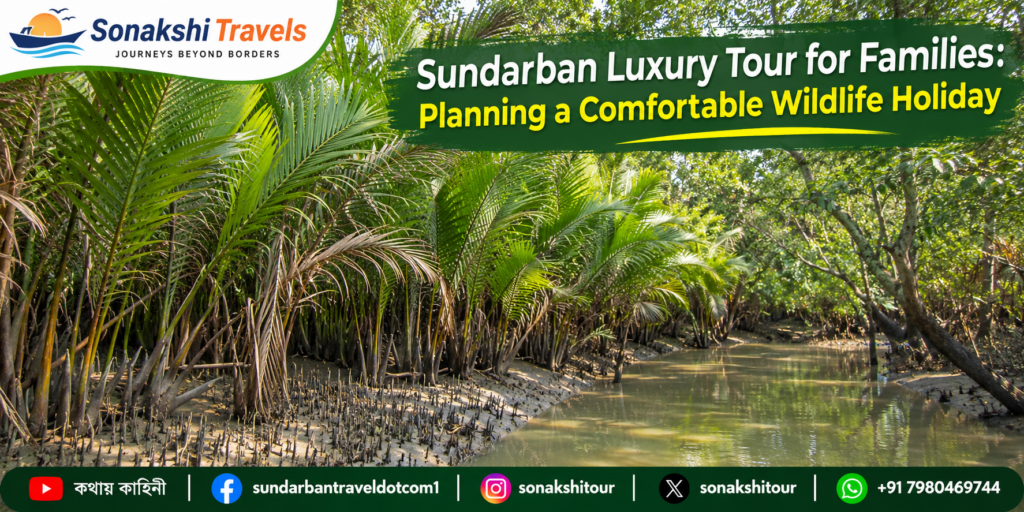
A Sundarban luxury tour for families can be a rewarding way to introduce children, parents and grandparents to one of India’s most remarkable natural environments. Yet organising a comfortable family wildlife holiday requires more than choosing an attractive resort or booking a private boat. Children need safe surroundings and engaging activities, older travellers may appreciate easier transfers, and everyone benefits from sensible meal times and opportunities to rest. Thoughtful luxury tour planning combines these different needs into a realistic itinerary. This guide explains how to select suitable transport, accommodation, boat facilities, safari duration and safety arrangements, helping families experience the Indian Sundarbans comfortably without compromising responsible wildlife observation.
The Indian Sundarbans are different from conventional wildlife destinations. Visitors generally explore the protected landscape from registered boats navigating tidal waterways rather than travelling through forests in open safari vehicles. The setting creates wonderful opportunities to observe mangroves, waterbirds, deer and occasionally more elusive wildlife. However, long boat journeys, boarding arrangements, changing weather and the unpredictability of animal sightings deserve careful consideration when travelling with children or older relatives.
A well-organised private tour allows the family to enjoy the waterways together while reducing many of the inconveniences associated with larger group departures. Nevertheless, comfort depends on the actual facilities provided and the suitability of the itinerary. This article concentrates on practical family decisions, including child-friendly accommodation, private transfers, meals, safety and realistic sightseeing plans. Travellers seeking broader destination guidance can also consult our Sundarban Luxury Tour Planning Guide for First-Time Visitors.
1. Is a Sundarban Luxury Tour Suitable for Families?
A properly organised Sundarban holiday can be suitable for many families, including those travelling with school-age children, teenagers and grandparents. The experience combines natural scenery, guided wildlife observation and time together aboard a boat. Unlike physically demanding trekking holidays, much of the sightseeing takes place while seated. This can be convenient for travellers who enjoy nature but do not wish to undertake long walks.
However, a boat-based holiday is not automatically appropriate for every age or mobility level. Families must consider the length of daily cruises, safe boarding, access to toilets, protection from the sun and the availability of suitable life jackets. Children who find it difficult to remain seated for extended periods may become restless during long wildlife excursions. Older guests may need additional help getting aboard or moving around the vessel.

What Makes the Experience Family-Friendly?
The greatest advantage is the opportunity to share a nature-focused journey at a relatively unhurried pace. Children can observe birds, learn about tides and mangrove roots, and discover how animals adapt to a coastal forest. Adults may enjoy photography and the quiet river landscape, while grandparents can participate in the same experience without needing to follow a demanding walking route.
A private arrangement also allows greater control over meals, seating and the overall holiday schedule. Even so, actual movement within protected forest areas remains subject to official routes, permissions and operating hours. Private access should never be confused with unrestricted freedom to explore the forest.
2. Why Choose a Private Sundarban Safari for Your Family?
The distinction between a private and shared tour becomes particularly important when several generations travel together. A shared departure normally follows a predetermined schedule designed around a larger group. A private tour can offer a more personal setting, allowing the family to discuss its needs directly with the operator, boat crew and guide.

Privacy is valuable for parents managing young children, families celebrating a special occasion and travellers who prefer a quieter atmosphere. Children may occasionally need food, a change of clothing or a short rest. Older guests may prefer a comfortable seat away from direct sunlight. When facilities permit, these requirements are easier to coordinate within a private group.
Private Boat Versus Shared Boat
| Consideration | Private Boat | Shared Boat |
|---|---|---|
| Privacy | Reserved for your group | Shared with other travellers |
| Meals | Greater scope for agreed customisation | Often follows a fixed group menu |
| Family comfort | Seating and requests can be discussed individually | Arrangements depend on the group |
| Safari schedule | Some flexibility within permitted arrangements | More standardised departure times |
| Cost structure | Usually priced for the group | Often priced per traveller |
The best choice depends on budget, passenger ages and expectations. Travellers considering a private luxury Sundarban tour package should confirm the exact vessel, number of passengers, available facilities and whether private transport from Kolkata forms part of the quotation.
3. Planning a Safe and Comfortable Safari with Children
Children often find the Sundarbans fascinating because the landscape feels different from a city park or conventional zoo. The changing riverbanks, exposed mangrove roots and possibility of spotting wild animals can turn a boat journey into a memorable learning experience. Nevertheless, excitement should never take priority over safety, particularly around water.

Life Jackets and Boat Safety
The Sundarban Tiger Reserve requires tourist boats to carry sufficient life jackets, a first-aid box and a fire extinguisher. Families should go beyond simply confirming that life jackets are present. Ask whether correctly sized jackets are available for every child, including smaller children, and whether all passengers can be fitted appropriately. Follow the crew’s instructions about when jackets must be worn.
A parent or responsible adult should supervise young children continuously, particularly around stairs, deck openings and railings. Children must not lean over the side, climb railings or move between decks without permission. Boats and tidal jetties may shift with water movement, making boarding and disembarkation important moments for close supervision.
Choosing Activities for Different Ages
School-age children may enjoy identifying kingfishers, herons, deer and crocodiles with the help of a guide. A pair of manageable binoculars can make observation more engaging. Parents can create simple challenges, such as recognising different mangrove leaves or observing how the riverbank changes with the tide. These activities help children appreciate nature without requiring dramatic wildlife encounters.
Younger children may have shorter attention spans. For them, a shorter cruising period and comfortable rest arrangements may be preferable to an ambitious full-day programme. Teenagers interested in photography or ecology may enjoy more detailed explanations from a knowledgeable guide, particularly when the family has time to observe wildlife patiently.
Are Babies and Toddlers Suitable Travellers?
Travelling with babies or toddlers requires individual assessment. Consider the child’s health, heat tolerance, feeding routine, available safety equipment and ability to remain secure on the vessel. Ask the operator about age-related restrictions, suitable life jackets, sanitary facilities and the practical arrangements for an early return if necessary.
A private trip does not eliminate the challenges associated with a remote river environment. Parents should consult their paediatrician about individual health concerns and avoid assuming that every boat or resort is equipped for very young children. If suitable safety arrangements cannot be confirmed, choosing a different family activity may be more appropriate.
4. Choosing Family-Friendly Accommodation in the Sundarbans
Accommodation can have a greater influence on family comfort than decorative luxury. After several hours on the water, guests appreciate clean rooms, comfortable bedding, reliable bathroom facilities, suitable meals and a peaceful place to rest. For families, practical room arrangements are often more important than impressive promotional photographs.
Family Rooms and Connecting Accommodation
Before choosing a resort, establish the number of adults and children, their ages and the preferred sleeping arrangement. Some families need connecting rooms, while others prefer a larger family unit or separate accommodation for grandparents. Ask whether extra beds are available, whether they attract additional charges and how many guests can legally and comfortably occupy each room.
Parents travelling with young children may prefer rooms close to one another and easy access to the dining area. Ground-floor rooms can be helpful when travelling with elderly relatives, although accessibility should be verified directly with the property.
Important Facilities to Confirm
- Air-conditioning and dependable power arrangements.
- Clean attached bathrooms and hot-water availability.
- Appropriate room capacity and additional bedding.
- Suitable food arrangements for children and older guests.
- Safe access between rooms, dining areas and boat transfers.
- Availability of ground-floor accommodation if needed.
- Swimming-pool supervision and safety arrangements where applicable.
- Cancellation conditions and check-in arrangements.
A swimming pool may appeal to children, but it requires close adult supervision. Never assume that a pool has a lifeguard or dedicated shallow children’s section without confirmation. Similarly, labels such as deluxe, premium or luxury are not standardised across all properties. Request the exact resort name, room category and relevant photographs before booking.
Families comparing a Sundarban luxury tour package should evaluate accommodation convenience alongside safari arrangements. A slightly simpler property with comfortable rooms and easier transfers may suit some families better than an expensive resort located farther from their preferred boating route.
5. Kolkata Transfers and Travelling with Grandparents
For international families, the journey usually begins in Kolkata, where guests may be staying after arriving by air. A private AC car can simplify the transfer towards a boarding point such as Godkhali. Instead of managing several independent connections, the family can coordinate pickup, luggage and onward boat arrangements through the operator.
Vehicle selection deserves attention. A group of six travelling with large suitcases may require substantially more space than six passengers with small overnight bags. Children who need suitable restraint systems and elderly relatives who prefer easier entry should have their requirements discussed in advance. Do not choose a vehicle based solely on the advertised number of seats.
Making the Road Journey Comfortable
The road transfer from Kolkata towards the Sundarbans can take several hours, depending on the pickup point, traffic and route. Families should agree on a realistic departure time and allow sufficient time for breaks when necessary. Carry personal medication, drinking-water arrangements and a small bag of easily accessible essentials rather than placing everything in the main luggage compartment.
Avoid scheduling the journey immediately after a tiring international flight unless the connection has been carefully assessed. A night in Kolkata before departure can be especially useful for families adjusting to a new time zone or travelling with young children.
Older Travellers and Mobility Considerations
Older guests may enjoy a quiet river cruise, but physical comfort varies considerably. Ask about boarding steps, handrails, deck seating, toilet access and the distance between the jetty and boat. Some watchtower visits involve additional walking or steps, and participation should remain optional when possible.
Guests using walking sticks, wheelchairs or other mobility aids should discuss their needs before booking. A private vehicle or boat does not necessarily provide step-free access. The operator should explain the actual facilities available instead of promising accessibility without inspection.
6. Family Meals, Dietary Needs and Personal Comfort on the Boat
Meal planning is particularly important when travelling with children or several generations. A long river cruise may involve breakfast, lunch and refreshments aboard the vessel, depending on the selected package. Families should understand the meal arrangements before departure so that feeding schedules and dietary requirements do not become an unnecessary source of stress.
Customising Meals for Children
A privately arranged tour may offer scope to discuss familiar, mildly seasoned food for children. Rice, vegetables, eggs and suitable fish or chicken preparations may be appropriate depending on individual preferences. The exact menu must be agreed with the operator, rather than assumed from a package description.
Families should communicate allergies, vegetarian requirements, restrictions on specific ingredients and other dietary considerations in writing. Where a severe food allergy is involved, confirm whether the kitchen can safely manage preparation and cross-contact risks. Never assume that customisation alone guarantees an allergen-free meal.
Drinking Water and Hygiene
Ask how safe drinking water is supplied aboard the boat. The Sundarban Tiger Reserve prohibits single-use plastic bottles and other single-use plastics, so families should discuss permitted alternatives with the operator. Reusable containers may be helpful, provided they are filled from a safe source.
Confirm that the boat toilet is suitable for your family and that handwashing arrangements are available. Parents travelling with young children may need to carry additional clothing and appropriate personal hygiene supplies. Waste, including disposable personal-care materials, must be handled responsibly and never discarded into river water.
Avoid Overloading the Day Bag
Carry personal medicines, sun protection, suitable snacks where permitted, a light layer and essential child-care items. Keep the bag small enough to store securely without obstructing boat walkways. Larger suitcases and unnecessary valuables should remain in the agreed storage area.
7. Choosing the Right Tour Duration for Your Family
A family holiday should provide enough time to enjoy wildlife observation without exhausting younger or older members. The most suitable duration depends on the group’s ages, travel experience and comfort with long boat journeys. A longer tour is not automatically better for every family.
| Duration | Family Benefits | Main Consideration |
|---|---|---|
| One day | No overnight packing or resort stay | Long road transfers and less safari time |
| 1 night / 2 days | Combines wildlife cruising with an overnight rest | Limited time for additional routes |
| 2 nights / 3 days | More opportunity to separate transfers and safari activities | Requires greater time and budget commitment |
One-Day Family Safari
A day trip may suit families staying in Kolkata who want a brief introduction to the mangrove landscape. However, the road journey in both directions consumes a substantial portion of the day. Parents should consider whether children can comfortably manage an early departure, several hours of sightseeing and an evening return.
One Night and Two Days
A one-night trip offers an opportunity to break up travel with an overnight stay. This can be attractive for families seeking a mixture of nature observation and resort relaxation. The programme should include adequate time for meals and rest, rather than filling every available hour with scheduled activities.
Two Nights and Three Days
For families genuinely interested in wildlife, a two-night, three-day holiday may be a comfortable option. It allows more room for a considered schedule and potentially additional permitted wildlife-viewing periods. However, some forest routes may involve long hours on the water. Ask the operator to match the programme to the family rather than automatically selecting the longest available cruise.
Families considering a luxury private Sundarban family tour should compare the actual number of cruising hours, accommodation nights, transfer arrangements and included services, not merely the total package duration.
8. Making Wildlife Watching Educational and Enjoyable
The Sundarbans are home to a remarkable range of wildlife, but animals do not follow sightseeing schedules. Families should approach the experience with curiosity rather than a fixed expectation of seeing a tiger. Birds, mudskippers, mangrove roots, crocodiles and spotted deer can provide meaningful observations when the guide explains their place in the ecosystem.
Setting Realistic Expectations About Tigers
The Royal Bengal Tiger is the region’s most celebrated animal, yet a sighting is never guaranteed. Dense mangrove vegetation, animal behaviour, tides and the considerable extent of protected habitat affect visibility. Families should not judge the quality of their holiday solely by whether a tiger appears.
For children, this is an opportunity to explain that wildlife tourism involves observing animals in their natural environment. A tiger remaining unseen is not evidence that the forest lacks wildlife. Learning to recognise tracks, habitats and ecological relationships can make the journey interesting even when large animals remain hidden.
Birdwatching as a Family Activity
Kingfishers, herons and other waterbirds are excellent subjects for family observation. Their colours, movements and feeding behaviour can be engaging for children. A guide can help explain why particular species are associated with tidal channels or exposed mudbanks. Bringing binoculars can improve the experience, especially when wildlife is some distance from the boat.
Ask children to observe quietly rather than shout when they notice an animal. Keeping noise low is important for responsible wildlife viewing. The reserve prohibits loud music, and visitors should avoid disturbing animals to obtain photographs or closer views.
Learning About Mangrove Forests
Mangrove trees provide another valuable educational subject. Their unusual roots, ability to tolerate saline conditions and relationship with tidal mud are distinctive features of the landscape. Families can ask the guide to explain why many mangrove roots remain exposed and how the forest helps protect the coastline.
The UNESCO-listed Indian Sundarbans support a complex ecosystem of tidal waterways, mangrove vegetation and diverse fauna. Understanding these relationships can give children a deeper appreciation of conservation than simply collecting wildlife photographs.
9. Budgeting and Booking a Private Family Luxury Tour
Family tour pricing should be evaluated according to the total group cost and what it includes. A private package may combine vehicle transfers, a dedicated boat, accommodation, meals, guiding and relevant entry arrangements. The quotation can vary according to group size, travel dates, room category and the length of the programme.
Understanding Children’s Charges
Children’s charges are not necessarily identical across operators or accommodation properties. Some packages distinguish between younger children sharing existing bedding and older children requiring separate beds or full meal arrangements. The age thresholds and additional charges should be confirmed in writing.
Provide the exact age of every child when requesting a quotation. Also mention whether a child needs a separate bed, special meals or additional safety arrangements. This avoids unexpected differences between the initially advertised price and the final booking amount.
Questions to Ask Before Paying
- Is the vehicle private from the agreed Kolkata pickup point?
- Is the safari boat reserved exclusively for our family?
- Are suitable life jackets available for all children?
- Which resort, room category and bedding arrangements are included?
- Are meals and dietary customisations confirmed?
- Are forest-entry charges and guide arrangements included?
- How many hours will we spend cruising each day?
- What are the advance-payment and cancellation conditions?
- What happens if weather or official restrictions change the schedule?
A written quotation should clearly distinguish confirmed inclusions from optional upgrades. Swimming-pool access, premium room categories, additional naturalist services and special transport requests should not be assumed unless specifically included. Families should also discuss the operator’s process for handling unexpected changes to the programme.
Documents for International Families
International families should prepare passports and appropriate Indian travel authorisations for each traveller. Under India’s e-Visa arrangements, eligible minor children require their own applications and valid individual passports. Check the latest government guidance for nationality-specific conditions and carry the documents requested for your forest-entry arrangements.
Save booking confirmations, emergency contact numbers and the operator’s pickup details where they can be accessed offline. Mobile connectivity may vary along the journey, making offline copies particularly useful for families travelling from overseas.
10. Family Travel Checklist and Frequently Asked Questions
The best family holiday preparations address ordinary comfort needs alongside the more exciting parts of the safari. Small practical decisions can have a considerable effect on the experience, particularly when several generations share the same itinerary.
Essential Family Packing Checklist
- Comfortable, breathable clothing in subdued colours.
- Light jackets or layers for cooler mornings.
- Sun hats, sunglasses and appropriate sunscreen.
- Comfortable footwear with reliable grip.
- Personal medicines and suitable first-aid essentials.
- Child-care and hygiene items where needed.
- Camera or binoculars for nature observation.
- Required identification and travel documents.
- A compact daypack and protective pouch for electronics.
The operator should separately confirm the available boat safety equipment, including properly sized life jackets. Families should not substitute ordinary buoyancy aids or inflatable toys for approved safety equipment.
FAQ: Is the Sundarban safari safe for children?
An authorised, properly operated boat tour can be suitable for many children when appropriate safety measures are followed. Parents must supervise children, confirm properly fitted life jackets and ensure they follow crew instructions. Suitability depends on the child’s age, health and individual needs.
FAQ: Which Sundarban tour duration is best for a family?
A one-night or two-night tour may provide a more relaxed experience than a same-day return, but the best choice depends on children’s ages, travel stamina and interests. Ask for a realistic itinerary rather than selecting a longer programme solely to maximise safari hours.
FAQ: Can grandparents join a private Sundarban tour?
Yes, many older travellers may enjoy a comfortable boat-based holiday. However, boarding arrangements, steps, toilet access and seating should be checked individually. Guests with reduced mobility should confirm accessibility before booking, and anyone with significant health concerns should seek appropriate medical advice.
FAQ: Can meals be customised for children?
Private tours may provide scope for agreed meal customisation, including familiar or mildly seasoned dishes. The exact menu and any dietary restrictions should be confirmed in advance. Families with food allergies must discuss preparation limitations and cross-contact risks directly with the provider.
FAQ: Are tiger sightings guaranteed on a family safari?
No. Royal Bengal Tigers inhabit the Sundarbans, but sightings depend on natural animal behaviour and environmental conditions. A private safari does not guarantee a tiger encounter. Birds, deer, crocodiles and mangrove ecology can still make the experience rewarding.
FAQ: Can families travel directly from Kolkata in a private car?
Private road transfers from an agreed Kolkata location can be arranged as part of a suitably configured package. The road journey ends at a selected gateway, where guests transfer to a boat for the river-based portion. Confirm the pickup location, vehicle capacity and exact jetty before departure.
Creating a Comfortable Family Wildlife Holiday
A successful Sundarban luxury tour for families balances wildlife observation with the needs of every traveller. Private transport, suitable boat facilities, carefully chosen accommodation and flexible meal arrangements can make a meaningful difference, especially when children and grandparents travel together. Safety deserves particular attention: confirm properly sized life jackets, appropriate boarding assistance and clear supervision arrangements before departure. A thoughtful itinerary should allow enough time to appreciate the mangrove environment without becoming physically exhausting.
Families will gain the most from approaching the Sundarbans as a genuine wildlife habitat rather than a destination promising specific animal encounters. Quiet birdwatching, learning about mangrove ecology and enjoying the river landscape together can be as valuable as a rare tiger sighting. For assistance with private family journeys, comfortable accommodation and Kolkata transfers, contact Sonakshi Travels to discuss your family’s ages, preferences and practical requirements before choosing a suitable itinerary.
Explore Our Latest and Updated Travel Guides
-
Luxury Sundarban Private Tour Cost: What Do You Get for the Higher Price?
Luxury Sundarban Private Tour Cost: What Do You Get for the Higher Price? Luxury in the Sundarbans has a rather different meaning from luxury in a metropolitan hotel or an international beach resort. It is expressed through the freedom to explore a magnificent tidal wilderness with your chosen companions, the comfort of returning to carefully selected accommodation and the reassurance that every important aspect of…
-
What Does Luxury Mean in the Sundarbans? Beyond Five-Star Rooms and Expensive Cars
What Does Luxury Mean in the Sundarbans? Beyond Five-Star Rooms and Expensive Cars At first glance, luxury travel appears easy to define. A sophisticated hotel, an expensive vehicle, beautifully presented meals and attentive hospitality are familiar indicators of a premium holiday. Yet a Sundarban luxury tour invites travellers to reconsider these conventional measures of indulgence. In a destination where tidal rivers determine the rhythm of…
-
Why True Sundarban Luxury Is Space, Time and Personal Attention
Why True Sundarban Luxury Is Space, Time and Personal Attention There is a particular kind of luxury that cannot be adequately described through the photographs of an expensive hotel room. It is experienced in the quiet moments of a journey, when there is no need to hurry, no competition for a comfortable seat and no obligation to adjust every personal preference to the expectations of…
-
How to Choose a Genuine Sundarban Private Tour Operator: 15 Questions to Ask Before Booking
How to Choose a Genuine Sundarban Private Tour Operator: 15 Questions to Ask Before Booking Choosing a genuine Sundarban private tour operator is one of the most important decisions you will make before exploring India's remarkable mangrove wilderness. A beautifully designed website may promise an exclusive boat, comfortable accommodation, experienced naturalists and unforgettable wildlife encounters. Yet these attractive descriptions do not always explain how the…
-
Sundarban Luxury Tour Crocodile and Deer Spotting: Beyond the Famous Bengal Tiger
Sundarban Luxury Tour Crocodile and Deer Spotting: Beyond the Famous Bengal Tiger A Royal Bengal Tiger may be the most celebrated animal of the Indian Sundarbans, but two other remarkable inhabitants often make a wildlife safari equally fascinating: the saltwater crocodile and the spotted deer. Crocodiles may rest almost motionless on exposed tidal mudbanks, while groups of chital deer feed along mangrove margins or emerge…
-
Sundarban Luxury Tour Full-Day Jungle Safari: What Happens from Morning to Evening?
Sundarban Luxury Tour Full-Day Jungle Safari: What Happens from Morning to Evening? A full-day jungle safari in the Indian Sundarbans is an experience shaped by tidal rivers, dense mangrove forests, changing wildlife activity and the quiet rhythm of travelling by boat. Unlike conventional jeep safaris, visitors explore the protected landscape through authorised waterways, observing forest banks and stopping at designated tourism facilities where permitted. A…
-
Sundarban Luxury Tour Morning Safari Experience: Light, Wildlife and River Landscapes
Sundarban Luxury Tour Morning Safari Experience: Light, Wildlife and River Landscapes Morning brings a distinctive atmosphere to the mangrove waterways of the Indian Sundarbans. Soft daylight gradually reveals the forest margins, reflections move across tidal rivers, and the sounds of birds become part of the experience of travelling through this remarkable landscape. For visitors planning a Sundarban Tour Private Wildlife Safari, a well-organised morning excursion…
-
Sundarban Luxury Tour Safari Safety: Understanding Wildlife Rules and Responsible Travel
Sundarban Luxury Tour Safari Safety: Understanding Wildlife Rules and Responsible Travel Safety is an essential part of experiencing the wild mangrove waterways of the Indian Sundarbans. A luxury safari may provide a comfortable private boat, experienced service team and personalised wildlife interpretation, but these advantages must operate within the safety requirements and conservation regulations established for the protected forest. Travellers booking a Sundarban Tour Private…
-
Sundarban Luxury Tour Watchtower Guide: Sajnekhali, Sudhanyakhali and Dobanki
Sundarban Luxury Tour Watchtower Guide: Sajnekhali, Sudhanyakhali and Dobanki The watchtowers of Sajnekhali, Sudhanyakhali and Dobanki offer three different ways to experience the remarkable mangrove landscape of the Indian Sundarbans. Sajnekhali introduces travellers to the forest through wildlife interpretation and designated observation facilities, Sudhanyakhali provides views towards a freshwater pond and surrounding mangrove habitat, while Dobanki is particularly recognised for its elevated canopy walkway. For…
-
Sundarban Luxury Tour Safari Permits: Entry Rules, Guides and Boat Requirements
Sundarban Luxury Tour Safari Permits: Entry Rules, Guides and Boat Requirements Planning a private wildlife safari in the Indian Sundarbans involves more than selecting a comfortable boat and arranging accommodation. Every legitimate journey into the protected tourism areas must respect forest entry permissions, authorised guides, boat registration requirements and conservation regulations. These arrangements are particularly important for travellers booking a Sundarban Tour Private Wildlife Safari,…
Turn Your Sundarban Plans into a Personalised Quotation
Tell Sonakshi Travels who is travelling and what you have in mind. Request availability, suitable stay options, and a clear package price for your party.
Prefer to speak directly? WhatsApp +91 7980469744 or call Sonakshi Travels.