Sundarban Luxury Tour with an English-Speaking Naturalist: What to Expect
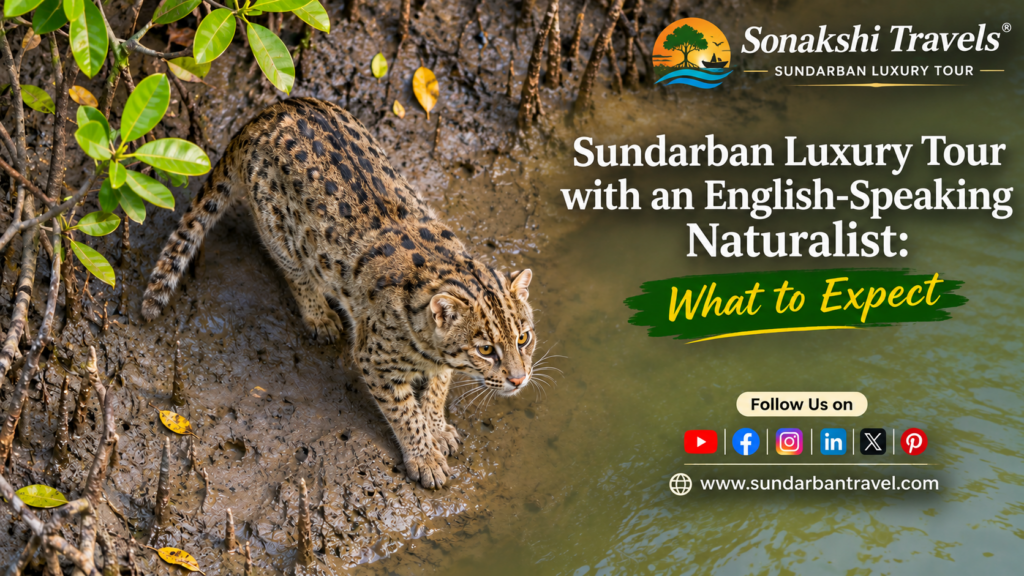
A Sundarban luxury tour with an English-speaking naturalist offers something more valuable than a comfortable private boat: the opportunity to understand one of the world’s most remarkable mangrove ecosystems through knowledgeable, accessible interpretation. For international travellers planning a Sundarban tour, language can make a considerable difference to the wildlife experience. An experienced naturalist can explain animal behaviour, identify birds, interpret mangrove adaptations and help visitors understand the relationship between tides, forests and local communities. Rather than simply travelling past unfamiliar waterways, guests gain a deeper appreciation of what they are observing. The quality of this experience, however, depends on the naturalist’s knowledge, communication skills and the arrangements confirmed before departure.
The Indian Sundarbans are unlike conventional wildlife safari destinations. Dense mangrove vegetation, tidal rivers, muddy shorelines and restricted forest access make wildlife observation challenging. Animals may be partially concealed, sightings can be distant, and much of the forest is experienced from a moving boat. Under these conditions, a naturalist’s ability to recognise subtle signs and explain the surrounding environment becomes particularly useful. Guests may learn why a particular creek attracts birds, how mangrove roots survive tidal flooding or why a tiger sighting is never guaranteed.
A premium guided experience should also be realistic about its limitations. An English-speaking naturalist is not necessarily the same person as the forest-authorised ecotourism guide required under local tourism rules. Travellers should understand the difference, confirm who will accompany them and establish the level of wildlife expertise included in their reservation. This guide explains the naturalist’s responsibilities, the activities guests can expect, how interpretation works during a private boat safari, what questions to ask before booking and how to assess the value of specialised guiding.
1. What Does an English-Speaking Naturalist Actually Do?
An English-speaking naturalist is a wildlife and nature interpreter who helps visitors understand the environment they are travelling through. In the Sundarbans, this work can cover mammals, birds, reptiles, mangrove plants, tidal ecology, conservation and the relationship between people and the forest. The best naturalists combine observational ability with an approachable communication style. They explain unfamiliar subjects without overwhelming guests with scientific terminology.
During a private safari, a naturalist may observe the shoreline through binoculars, draw attention to an interesting bird call or explain the feeding behaviour of animals visible from the boat. They may also help guests recognise details that would otherwise escape notice, such as a crocodile resting against muddy vegetation or the movement of spotted deer between mangrove trunks.

Wildlife interpretation rather than simple sightseeing
A basic sightseeing explanation might identify a bird or name a watchtower. Naturalist-led interpretation goes further by addressing why that species occupies a particular habitat, what it eats and how its behaviour relates to the surrounding ecosystem. This approach can turn a brief sighting into an engaging learning experience.
For instance, a kingfisher perched above a tidal creek provides an opportunity to discuss feeding techniques, water clarity and the importance of small aquatic animals. Even when the bird flies away before a photograph can be taken, the observation may remain meaningful because the visitor understands its ecological context.
English communication and international visitor needs
Language proficiency is particularly important when guests wish to ask detailed questions. International visitors may be unfamiliar with Indian wildlife terminology, local geography or the way forest tourism operates. A fluent naturalist can explain these subjects in clear English and adjust the level of detail to suit beginners, experienced birdwatchers or dedicated wildlife photographers.

However, speaking English does not automatically establish professional naturalist expertise. Travellers should assess communication ability and wildlife knowledge separately when reviewing a tour proposal.
2. English-Speaking Naturalist vs Mandatory Forest Guide
One of the most important booking considerations is the distinction between an authorised forest ecotourism guide and an additional specialist naturalist. The Sundarban Tiger Reserve requires ecotourism guides on boats entering the designated tourism areas. These guides have responsibilities connected with visitor information, tourism rules and safe conduct inside permitted areas.
A separately arranged English-speaking naturalist may provide more detailed commentary, specialised wildlife knowledge and additional personal attention. The arrangement does not replace the mandatory guide or grant access beyond the routes authorised by the Forest Department.
| Feature | Forest Ecotourism Guide | Specialist English-Speaking Naturalist |
|---|---|---|
| Main responsibility | Guide visitors within applicable forest tourism regulations | Provide detailed wildlife and ecological interpretation |
| Requirement | Required under applicable reserve tourism arrangements | Additional service when specifically booked |
| English proficiency | Varies between individual guides | Should be confirmed as part of the booking |
| Wildlife interpretation | General environmental and visitor information | Potentially more specialised explanations |
| Photography assistance | Varies according to experience | May offer behavioural and observational guidance |
| Forest access | Restricted to approved tourism rules and routes | No additional access privileges |
In some arrangements, an authorised guide may also possess excellent English and strong natural history knowledge. The need for an additional naturalist should therefore be evaluated according to the skills of the assigned guide rather than assumed in every case.
Before booking, ask whether the quotation includes one guide, two separate professionals or a guide who also serves as the principal English-language interpreter.
3. What to Expect During a Naturalist-Led Private Boat Safari
The experience normally begins with an introduction to the forest environment, the proposed route and the kinds of wildlife that might be encountered. The exact programme depends on permitted access, tides, weather, available daylight and the duration of the booking. A naturalist should explain that wildlife observation cannot follow a fixed timetable.
Early morning: Understanding the mangrove environment
Morning observations may include birds feeding beside waterways, macaques moving through vegetation and spotted deer near exposed shorelines. As the boat travels through appropriate channels, a naturalist can explain the visible characteristics of mangrove plants and the influence of tidal changes on the landscape.
This is also a useful time to introduce guests to binocular use, quiet observation and the importance of looking slowly across the forest edge. Travellers who are new to wildlife watching often benefit from these simple techniques before encountering more challenging sightings.
Midday: Exploring wildlife relationships
As the day progresses, sightings may become less frequent or change in character. A knowledgeable naturalist can maintain the educational value of the safari by discussing mangrove ecology, bird identification, animal movement and conservation.
Visitors may notice exposed breathing roots, changing mud levels or sections of forest with noticeably different vegetation. These are not merely background features. They help explain how plants survive in saline, waterlogged conditions and why the Sundarbans support such a distinctive ecosystem.
Afternoon: Reviewing observations
Later in the day, the naturalist can help guests review the wildlife recorded during the safari. This might include identifying birds from photographs, discussing uncertain sightings or explaining why particular species remained difficult to observe.
A well-managed private tour also allows time for questions and quiet reflection. Returning from a safari with a stronger understanding of the ecosystem can be more rewarding than concentrating exclusively on the number of animals seen.
Important: Naturalist-led safaris must follow official forest permissions, designated tourism routes and the permitted operating schedule. A private booking does not authorise night safaris, unrestricted exploration or landing on protected forest banks.
4. How a Naturalist Enhances Sundarbans Wildlife Encounters
The Sundarbans support a remarkable range of wildlife, but many animals are difficult to observe because of dense vegetation and the extensive network of waterways. UNESCO recognises the Indian Sundarbans for their outstanding mangrove ecosystem and biodiversity, including tigers, aquatic mammals, birds and reptiles.
A naturalist improves the visitor’s understanding of potential encounters rather than guaranteeing that animals will appear.
Royal Bengal tiger observations
The Royal Bengal tiger is the most sought-after animal for many visitors. Yet seeing one in the Sundarbans can be exceptionally difficult. Forest cover, animal movements, viewing distance and the limitations of boat-based observation all influence the possibility of a sighting.
An experienced naturalist can explain tiger adaptations, the significance of tidal habitats and why visitors must remain patient. They may discuss the ecological importance of a tiger even when no tiger is visible. Claims of guaranteed tiger encounters should be treated with caution.
Spotted deer, macaques and wild boar
Spotted deer and rhesus macaques can provide interesting opportunities to study animal behaviour. Deer may feed or remain alert along forest edges, while macaques move between branches and exposed ground. Wild boar may also be observed in suitable habitats.
A naturalist can explain how these animals use mangrove vegetation, respond to disturbance and interact with their environment. Watching behaviour carefully often reveals more than attempting to obtain a photograph immediately.
Crocodiles and reptiles
Estuarine crocodiles may be encountered in appropriate tidal habitats, including muddy edges and waterways. Water monitor lizards are another characteristic reptile of the region.
A naturalist can discuss their ecological roles, physical adaptations and the importance of observing them from a respectful distance. Visitors should never expect the boat to approach wildlife in a manner that compromises safety or causes disturbance.
Birdwatching and identification
Birdwatching is an especially rewarding part of a guided Sundarban experience because birds may be observed across several types of habitat. Kingfishers, herons and other water-associated birds offer opportunities to discuss feeding behaviour, camouflage and habitat selection.
For international travellers unfamiliar with South Asian birdlife, an English-speaking naturalist can help identify distinguishing features and explain differences between similar species. Dedicated birdwatchers should request someone with demonstrated regional ornithological knowledge.
5. Understanding Mangroves Through Professional Interpretation
Mangrove interpretation is one of the strongest reasons to choose a naturalist-led Sundarban tour. Unlike an ordinary forest landscape, the Sundarbans are continually shaped by tides, sediment movement, saltwater influence and seasonal changes. The environment may appear still from a boat, yet complex ecological processes are taking place.
Why mangrove roots look unusual
Some mangrove species develop specialised roots that help them survive waterlogged conditions. Upright breathing roots, exposed root structures and different growth patterns are among the most striking features visitors may encounter.
A naturalist can explain which plants have particular adaptations and how these features relate to the availability of oxygen in saturated soil. This interpretation is most useful when a relevant plant is actually visible rather than discussed only in abstract terms.
Recognising characteristic mangrove plants
Travellers may hear local names such as Sundari, Gewa, Keora, Goran and Golpata. These plants do not all have the same appearance or ecological requirements. A knowledgeable naturalist should distinguish between species when identification is possible, while acknowledging uncertainty when leaves, flowers or other important features cannot be observed clearly.
Understanding vegetation also provides context for wildlife. The shape of the shoreline, the density of roots and the presence of small channels can influence where birds, reptiles and mammals are found.
The influence of tides
The changing water level is central to understanding the Sundarbans. A bank that is exposed during one part of the day may be partly submerged later. Tides influence habitat accessibility, feeding opportunities and the appearance of the landscape.
A naturalist can help guests recognise these changes and understand how tidal ecosystems differ from inland forests. However, no naturalist can control tidal conditions or promise access to a particular creek at a specific moment.
6. Why Private Safaris Can Improve the Naturalist Experience
Private safaris may offer practical advantages for travellers who value detailed interpretation and a quieter environment. With fewer unrelated conversations and a more personalised programme, guests can ask questions without feeling hurried. The naturalist can also adapt explanations to the group’s interests.
Travellers considering an exclusive Sundarban private luxury tour should assess the proposed guiding arrangement alongside boat comfort, safety facilities and the time allocated to wildlife observation.
More meaningful interaction
During a private tour, the naturalist can spend more time explaining a particular observation. A family interested in mangrove ecology may prefer detailed discussions of plants and tidal processes, while experienced photographers may concentrate on animal behaviour and the practical limits of photographing wildlife from a boat.
The ability to adjust the emphasis is useful, although navigation, forest regulations and safety requirements always take priority over individual preferences.
A quieter observation environment
Wildlife watching benefits from patience and reduced unnecessary noise. Private boat arrangements can make it easier to maintain a calm atmosphere and minimise distractions, especially when guests share similar interests.
Nevertheless, a private vessel cannot eliminate engine noise, river traffic, changing weather or other environmental conditions. Nor does exclusivity guarantee closer wildlife sightings.
Comfort during extended interpretation
Comfort becomes important when guests spend several hours on a safari. Shaded seating, access to drinking water, suitable toilet facilities and opportunities to rest can make extended observation more pleasant. These features should be checked individually rather than assumed from the word luxury.
For travellers comparing Sundarban luxury tour package options, the naturalist’s presence and the boat’s practical facilities deserve separate consideration.
7. Choosing a Naturalist for an International Sundarban Tour
Not every English-speaking guide has the same professional background, and not every specialist naturalist is equally skilled at communicating with visitors. Selecting the right person involves more than confirming that someone will speak English during the journey.
Knowledge of the Indian Sundarbans
Local ecological understanding is particularly valuable because the Sundarbans differ substantially from terrestrial tiger reserves. Ask whether the proposed naturalist has experience interpreting tidal waterways, mangrove vegetation, regional birds and the wildlife commonly observed from boats.
General familiarity with Indian wildlife is helpful, but it should not be treated as a substitute for knowledge of this specific destination.
Communication and teaching ability
A good naturalist should speak clearly, respond patiently and explain scientific concepts at an appropriate level. International travellers often appreciate someone who can move comfortably between basic explanations and more detailed discussion.
If wildlife education is a major priority, ask the operator about the naturalist’s previous experience with English-speaking visitors. A short introductory conversation may be useful when practical.
Experience with specialised interests
Birdwatchers, photographers, families and senior visitors may have different requirements. A birdwatching group might prioritise identification skills, while photographers may prefer a naturalist who understands animal behaviour and the limitations of working from a moving vessel.
Guests seeking a quieter, more relaxed safari may value an interpreter who recognises when to provide information and when to allow uninterrupted observation.
What should be confirmed before booking?
- Whether the naturalist is fluent in conversational English.
- Whether the naturalist is separate from the mandatory forest guide.
- Whether the specialist accompanies guests throughout the safari or only during selected activities.
- Whether the person has relevant Sundarban wildlife experience.
- Whether birdwatching or photography interpretation is available.
- Whether the quoted price includes specialist guiding fees.
- What happens if the named naturalist becomes unavailable.
A detailed written answer to these questions provides a much stronger basis for comparison than a package description stating only that an experienced guide is included.
8. Planning the Right Length of Naturalist-Led Tour
The duration of a tour influences how much time guests have for observation, discussion and learning. A shorter trip can provide a useful introduction, but additional safari days allow visitors to experience different waterways and spend more time observing ecological details.
| Duration | Naturalist Experience | Best Suited To |
|---|---|---|
| One-day private tour | Introductory wildlife interpretation within a limited schedule | Travellers with restricted time |
| Two days, one night | More opportunities for discussion and observation across the planned safari | Visitors seeking a short guided nature holiday |
| Three days, two nights | Greater scope for repeated observation and more detailed ecological interpretation | Wildlife enthusiasts and international travellers |
| Four days or longer | Extended opportunities for specialised interests, subject to route permissions | Dedicated nature travellers and photographers |
Additional days improve the time available for observation but do not guarantee encounters with particular species. It is also important to confirm whether the English-speaking naturalist is booked for every safari day rather than just the initial excursion.
Travellers planning a longer journey can consult the complete Sundarban luxury tour guide for international travellers for broader context on organising a visit from India or abroad.
Arrival and transfer arrangements
Most international visitors approach the Indian Sundarbans through Kolkata. The onward journey generally involves road transport to an appropriate boat departure point, followed by water transport. The naturalist may join the group at the boarding point or another agreed location.
Travellers should confirm the meeting point, transfer arrangements and whether the naturalist is available during road travel. A promise of specialist interpretation throughout the holiday should not be assumed unless it is stated in the itinerary.
Choosing a comfortable pace
Long wildlife days can involve considerable time aboard a boat. Senior travellers, families and guests with mobility concerns should discuss boarding arrangements, seating, stairs, toilet access and rest requirements before committing to an itinerary.
A naturalist can adapt the presentation and pace of commentary, but cannot remove physical barriers inherent in a particular vessel or jetty. Accessibility should therefore be assessed separately from guiding quality.
9. Costs, Inclusions and the Value of Specialist Guiding
The cost of an English-speaking naturalist can depend on the person’s experience, tour duration, travel arrangements and whether specialist services are already included in the package. There is no single reliable price that applies to every private Sundarban tour.
Some operators may include an English-speaking interpreter in a premium quotation, while others may charge separately for a specialist naturalist. Travellers should request an itemised explanation rather than relying on the package category.
When reviewing a private luxury Sundarban safari package, compare the actual services provided. A lower headline price may not be directly comparable with a quotation that includes dedicated specialist guiding across several days.
What should an itemised quotation explain?
The proposal should identify the guide arrangement, number of days of service, guiding language, permitted safari programme, boat facilities, transfers and accommodation where applicable. It should also state whether forest permits, applicable entry charges and other operational costs are included.
Any payment for a separately arranged naturalist should be clearly described. Travellers may also wish to confirm the cancellation policy if a specific specialist is important to their booking decision.
When is the additional expense worthwhile?
Specialist interpretation may be particularly worthwhile for travellers with a strong interest in natural history, wildlife photography, birdwatching or conservation. It can also benefit international guests who wish to understand the environment rather than simply visit its recognised attractions.
However, the most expensive guiding arrangement is not automatically the best. An exceptionally knowledgeable authorised guide with excellent English may meet the needs of some visitors without requiring another professional.
The relevant question is whether the additional service produces meaningful educational value for the particular group.
10. Responsible Wildlife Tourism and Realistic Expectations
A professional naturalist should encourage responsible wildlife observation and respect for the restrictions governing protected forests. The Sundarbans are a sensitive tidal ecosystem, not an open wildlife park where visitors can choose their own route or approach animals freely.
Forest tourism regulations govern boat movements, permitted landing points and conduct within designated areas. Visitors should follow instructions concerning noise, waste, wildlife disturbance and safe behaviour. Drones, unauthorised access and inappropriate approaches to animals are not acceptable substitutes for patient observation.
One of the strongest indicators of a trustworthy naturalist is a willingness to explain what cannot be promised. A naturalist cannot arrange a tiger sighting, control the movement of crocodiles or make birds remain in position for photographs.
For international guests considering a professionally organised Sundarban tour from Kolkata, responsible guiding should be assessed alongside comfort and convenience. Conservation awareness is part of the value of travelling with a knowledgeable interpreter.
Practical advice: Wildlife sightings, route access and daily schedules vary. Confirm current forest permissions and foreign visitor documentation requirements before departure. Carry appropriate identification and follow instructions issued by the authorised guide and forest authorities.
Frequently Asked Questions About English-Speaking Naturalists
1. Is an English-speaking naturalist included in every Sundarban luxury tour?
No. A luxury tour package does not automatically include a dedicated English-speaking naturalist. Some packages include an authorised forest guide who can communicate in English, while others may provide a separate specialist. Ask the operator to identify the personnel included in the quotation and their respective responsibilities.
2. Can a naturalist guarantee a Royal Bengal tiger sighting?
No. Tiger sightings are unpredictable because of the Sundarbans’ dense vegetation, extensive waterways and natural animal behaviour. A naturalist can interpret the habitat and help guests understand potential observations, but cannot guarantee that a tiger will be seen.
3. Is an additional naturalist necessary if a forest guide is already present?
Not always. If the authorised guide has strong English communication skills and suitable natural history expertise, that person may provide an excellent experience. An additional specialist becomes more valuable when guests require detailed wildlife education, dedicated birdwatching interpretation or personalised natural history discussions.
4. Can the naturalist accompany guests for a three-day safari?
Yes, a multi-day naturalist arrangement may be requested, subject to the specialist’s availability and the operator’s confirmed booking terms. Travellers should establish whether the professional accompanies every safari day and whether any days attract additional fees.
5. Can an English-speaking naturalist help wildlife photographers?
A naturalist with relevant experience may help identify species, explain behavioural patterns and recognise opportunities for observation. However, professional photographic instruction, specialist equipment guidance and advanced camera coaching should not be assumed unless separately confirmed.
6. Are foreign visitors permitted to take naturalist-led boat safaris?
International visitors can participate in properly arranged tourism activities, subject to the applicable entry and documentation requirements. Because published official information concerning additional foreign visitor permissions is inconsistent, travellers should ask their operator to verify current requirements with the appropriate forest authority before travel.
Is a Naturalist-Led Sundarban Luxury Tour Worth Choosing?
An English-speaking naturalist can make a substantial difference to the quality of a Sundarban wildlife holiday, particularly for international travellers who want to understand the landscape rather than simply pass through it. Careful explanation transforms mangrove roots, tidal channels, birds and occasional wildlife encounters into an interconnected picture of a remarkable ecosystem.
The greatest value comes from matching the naturalist’s expertise to the visitor’s interests. Strong communication skills, genuine regional knowledge, realistic wildlife expectations and a clearly defined guiding role matter more than impressive promotional descriptions. A private boat may provide a comfortable setting for learning, but it cannot guarantee wildlife encounters or override forest regulations.
Sonakshi Travels can help travellers discuss private safari arrangements, English-speaking naturalist requirements and suitable itineraries according to their interests and preferred travel dates. Before confirming a reservation, request written details of the proposed guide, the duration of specialist services and all applicable inclusions. Thoughtful preparation will help ensure that the experience is comfortable, informative and respectful of the Sundarbans’ fragile natural environment.
Explore Our Latest and Updated Travel Guides
-
Luxury Sundarban Private Tour Cost: What Do You Get for the Higher Price?
Luxury Sundarban Private Tour Cost: What Do You Get for the Higher Price? Luxury in the Sundarbans has a rather different meaning from luxury in a metropolitan hotel or an international beach resort. It is expressed through the freedom to explore a magnificent tidal wilderness with your chosen companions, the comfort of returning to carefully selected accommodation and the reassurance that every important aspect of…
-
What Does Luxury Mean in the Sundarbans? Beyond Five-Star Rooms and Expensive Cars
What Does Luxury Mean in the Sundarbans? Beyond Five-Star Rooms and Expensive Cars At first glance, luxury travel appears easy to define. A sophisticated hotel, an expensive vehicle, beautifully presented meals and attentive hospitality are familiar indicators of a premium holiday. Yet a Sundarban luxury tour invites travellers to reconsider these conventional measures of indulgence. In a destination where tidal rivers determine the rhythm of…
-
Why True Sundarban Luxury Is Space, Time and Personal Attention
Why True Sundarban Luxury Is Space, Time and Personal Attention There is a particular kind of luxury that cannot be adequately described through the photographs of an expensive hotel room. It is experienced in the quiet moments of a journey, when there is no need to hurry, no competition for a comfortable seat and no obligation to adjust every personal preference to the expectations of…
-
How to Choose a Genuine Sundarban Private Tour Operator: 15 Questions to Ask Before Booking
How to Choose a Genuine Sundarban Private Tour Operator: 15 Questions to Ask Before Booking Choosing a genuine Sundarban private tour operator is one of the most important decisions you will make before exploring India's remarkable mangrove wilderness. A beautifully designed website may promise an exclusive boat, comfortable accommodation, experienced naturalists and unforgettable wildlife encounters. Yet these attractive descriptions do not always explain how the…
-
Sundarban Luxury Tour Crocodile and Deer Spotting: Beyond the Famous Bengal Tiger
Sundarban Luxury Tour Crocodile and Deer Spotting: Beyond the Famous Bengal Tiger A Royal Bengal Tiger may be the most celebrated animal of the Indian Sundarbans, but two other remarkable inhabitants often make a wildlife safari equally fascinating: the saltwater crocodile and the spotted deer. Crocodiles may rest almost motionless on exposed tidal mudbanks, while groups of chital deer feed along mangrove margins or emerge…
-
Sundarban Luxury Tour Full-Day Jungle Safari: What Happens from Morning to Evening?
Sundarban Luxury Tour Full-Day Jungle Safari: What Happens from Morning to Evening? A full-day jungle safari in the Indian Sundarbans is an experience shaped by tidal rivers, dense mangrove forests, changing wildlife activity and the quiet rhythm of travelling by boat. Unlike conventional jeep safaris, visitors explore the protected landscape through authorised waterways, observing forest banks and stopping at designated tourism facilities where permitted. A…
-
Sundarban Luxury Tour Morning Safari Experience: Light, Wildlife and River Landscapes
Sundarban Luxury Tour Morning Safari Experience: Light, Wildlife and River Landscapes Morning brings a distinctive atmosphere to the mangrove waterways of the Indian Sundarbans. Soft daylight gradually reveals the forest margins, reflections move across tidal rivers, and the sounds of birds become part of the experience of travelling through this remarkable landscape. For visitors planning a Sundarban Tour Private Wildlife Safari, a well-organised morning excursion…
-
Sundarban Luxury Tour Safari Safety: Understanding Wildlife Rules and Responsible Travel
Sundarban Luxury Tour Safari Safety: Understanding Wildlife Rules and Responsible Travel Safety is an essential part of experiencing the wild mangrove waterways of the Indian Sundarbans. A luxury safari may provide a comfortable private boat, experienced service team and personalised wildlife interpretation, but these advantages must operate within the safety requirements and conservation regulations established for the protected forest. Travellers booking a Sundarban Tour Private…
-
Sundarban Luxury Tour Watchtower Guide: Sajnekhali, Sudhanyakhali and Dobanki
Sundarban Luxury Tour Watchtower Guide: Sajnekhali, Sudhanyakhali and Dobanki The watchtowers of Sajnekhali, Sudhanyakhali and Dobanki offer three different ways to experience the remarkable mangrove landscape of the Indian Sundarbans. Sajnekhali introduces travellers to the forest through wildlife interpretation and designated observation facilities, Sudhanyakhali provides views towards a freshwater pond and surrounding mangrove habitat, while Dobanki is particularly recognised for its elevated canopy walkway. For…
-
Sundarban Luxury Tour Safari Permits: Entry Rules, Guides and Boat Requirements
Sundarban Luxury Tour Safari Permits: Entry Rules, Guides and Boat Requirements Planning a private wildlife safari in the Indian Sundarbans involves more than selecting a comfortable boat and arranging accommodation. Every legitimate journey into the protected tourism areas must respect forest entry permissions, authorised guides, boat registration requirements and conservation regulations. These arrangements are particularly important for travellers booking a Sundarban Tour Private Wildlife Safari,…
Turn Your Sundarban Plans into a Personalised Quotation
Tell Sonakshi Travels who is travelling and what you have in mind. Request availability, suitable stay options, and a clear package price for your party.
Prefer to speak directly? WhatsApp +91 7980469744 or call Sonakshi Travels.