Sundarban Luxury Tour Morning Safari Experience: Light, Wildlife and River Landscapes
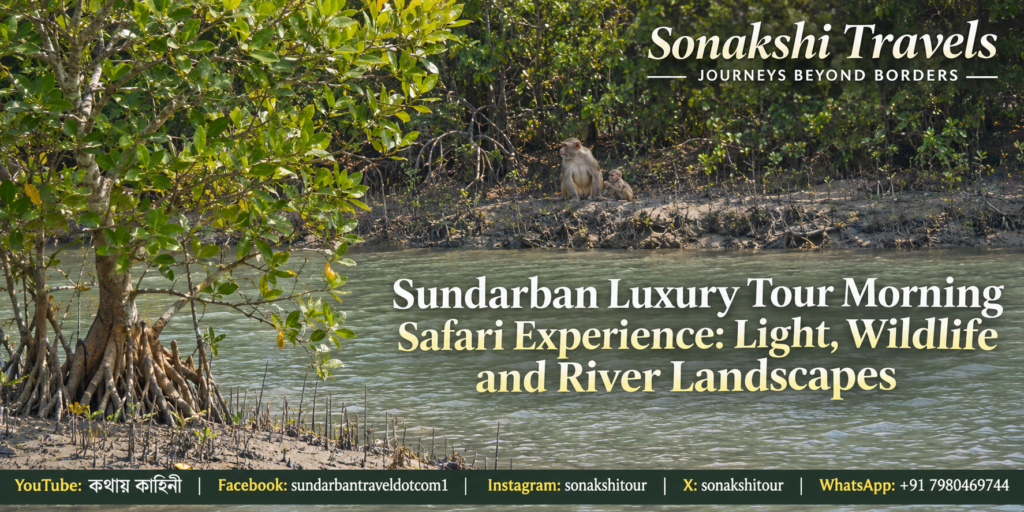
Morning brings a distinctive atmosphere to the mangrove waterways of the Indian Sundarbans. Soft daylight gradually reveals the forest margins, reflections move across tidal rivers, and the sounds of birds become part of the experience of travelling through this remarkable landscape. For visitors planning a Sundarban Tour Private Wildlife Safari, a well-organised morning excursion offers opportunities to appreciate changing light, observe wildlife from an authorised boat and photograph the natural details of the delta. The attraction is not a promise of seeing a Royal Bengal Tiger at sunrise. It is the opportunity to witness the mangrove environment as daylight develops, with greater attention to river scenery, bird activity, exposed mudbanks and the subtle movements of animals along the forest edge.
A morning safari in the Sundarbans differs from the early jeep drives associated with terrestrial tiger reserves. Visitors explore waterways rather than forest roads, and the appearance of the landscape is influenced by both sunlight and tidal movement. A riverbank that appears broad and exposed during one part of the morning may be partly submerged at another. Mangrove branches cast changing shadows across the water, while birds may use exposed perches and feeding areas according to local conditions.
The quality of this experience depends on appropriate planning. Forest entry permissions, registered boats, authorised guides and official operating periods determine when and where a safari may take place. A private vessel can provide comfort and a quieter setting for observation, but it cannot guarantee particular wildlife sightings or unrestricted early access. This guide explores the atmosphere of a Sundarban morning safari, the photographic advantages of changing light, realistic wildlife expectations, river landscape features and the practical considerations involved in choosing a luxury itinerary.
What Makes a Sundarban Morning Safari Different?
The most distinctive feature of a Sundarban morning safari is the relationship between daylight, moving water and mangrove vegetation. The forest is not a continuous landscape of open trails. Instead, islands and interconnecting channels create a series of changing views. From the boat, travellers observe the edges of these islands while looking for birds, mammals, reptiles and the natural details that reveal how the ecosystem functions.
Early daylight can make this landscape especially attractive. Where the sky is clear or lightly clouded, lower-angle sunlight may illuminate one side of a riverbank while leaving the opposite bank in shade. Reflections can become prominent on relatively calm sections of water, and pale mist may occasionally soften distant vegetation when suitable atmospheric conditions occur. None of these effects is guaranteed; the appearance changes with weather, season and local surroundings.

A quieter setting for natural observation
A privately arranged morning cruise can allow travellers to concentrate on nature without sharing the boat with unrelated groups. Conversations can be kept quiet, binoculars remain close at hand, and the guide can respond to the interests of the passengers. This is particularly appealing to birdwatchers, photographers and visitors who prefer observation over a hurried sequence of sightseeing stops.
Quiet conduct is also consistent with the Sundarban Tiger Reserve’s visitor rules, which prohibit loud music in forest areas. However, privacy does not mean exclusive ownership of a waterway. Other authorised boats may use the same route, and the crew must respect the same navigation and conservation requirements.
An experience shaped by two natural rhythms
Sunlight and tide are the two rhythms visitors should understand before judging a morning safari. Sunlight changes in a broadly predictable daily sequence, but local clouds can alter the effect dramatically. Tides operate on their own cycle and do not necessarily coincide with sunrise or the start of a tourist excursion.

A beautiful morning may coincide with relatively high water, leaving little exposed mudbank visible. On another day, lower water may reveal broad muddy edges and breathing roots. Both conditions can produce interesting scenery, but they offer different opportunities for observing animals and photographing the landscape.
The Changing Morning Light Across Sundarban Rivers
Photography is one of the principal reasons many travellers value morning exploration. Compared with strong overhead daylight, lower-angle sunlight can produce gentler modelling across branches, roots, riverbanks and animals. The direction of the light often matters as much as its apparent softness.
The precise appearance of the morning depends on the season, cloud cover, humidity and the boat’s position relative to the sun. Travellers should therefore think of attractive light as a possibility to plan around rather than a fixed effect delivered at a particular clock time.

First light and the appearance of the river
Before direct sunlight reaches the river, the sky may provide relatively even illumination. The outlines of distant mangrove islands can appear as layered silhouettes, and reflections may be less contrasty than they become after the sun rises higher. On some mornings, moisture in the air adds a muted atmosphere to the scene.
This phase can be attractive from an authorised starting location or during permitted navigation. However, a scenic pre-sunrise departure through an inhabited waterway should not be confused with permission to enter protected tourism channels before their authorised opening period.
Soft sunshine and mangrove colours
As the morning develops, sunlight may begin reaching foliage and exposed banks at an angle. Leaves can show subtle differences between yellow-green highlights and darker shaded surfaces. Wet mud often reflects light differently from dry patches, while tidal pools can mirror branches or fragments of sky.
These small variations are particularly valuable in photographs. Rather than producing a uniformly green image, carefully chosen framing can reveal the contrasting textures of water, roots, mud and foliage. A private boat may provide a more comfortable environment for waiting for a useful view, where the authorised route and captain’s decisions allow it.
How light direction influences wildlife photographs
An animal facing the light may show clear details across its body. Side lighting can emphasise texture and shape, while backlighting may create an attractive outline but leave the subject’s face in shadow. These effects can be useful with birds, deer and crocodiles, provided the animal is visible from a safe distance.
A photographer should not assume that every encounter will occur with ideal lighting. The boat may be unable to change its position because of currents, navigational safety or forest route restrictions. Respecting those limitations is part of responsible wildlife photography.
Which Wildlife Might You See During a Morning Sundarban Safari?
Morning excursions provide opportunities to look for wildlife along mangrove banks and waterways, but the time of day alone cannot predict which animals will appear. Visibility depends on habitat, individual behaviour, tide, weather and the particular authorised route travelled.
The Sundarbans support an exceptional range of fauna, including tigers, spotted deer, macaques, wild boar, crocodiles, water monitors and numerous birds. Visitors should distinguish the confirmed presence of a species in the wider reserve from the likelihood of observing it during a normal tourist journey.
Spotted deer along the mangrove banks
Spotted deer, also called chital, are among the most characteristic mammals to look for. Their reddish-brown coats and white spots can become visible when animals occupy exposed ground near forest vegetation. A small group may be feeding, resting or moving along the bank when a boat passes at a suitable distance.
Morning light may provide attractive photographic conditions if the deer remain in an open position. However, sightings are not restricted to this time of day, and dense foliage can conceal the animals even when they are close to the river.
Rhesus macaques and wild boar
Rhesus macaques may occupy branches overlooking the water or move through the vegetation along the bank. Their social interactions, feeding behaviour and movement between branches can provide engaging observations, particularly when a guide can explain the behaviour without disturbing the animals.
Wild boar may also be encountered on suitable muddy edges or near vegetation. They often remain difficult to observe for long because a short movement can take them behind dense cover. Travellers should watch for movement rather than expecting animals to stand openly in the morning sunlight.
Saltwater crocodiles and water monitors
Saltwater crocodiles are associated with the tidal waterways of the Sundarbans and may sometimes be visible on exposed banks or partly submerged near a shoreline. Asian water monitors can also use muddy banks, roots and water. Their visibility depends partly on whether suitable resting or movement areas are exposed and whether an individual happens to be present.
It would be inaccurate to describe sunrise as a guaranteed crocodile-basking period. Reptile behaviour varies with temperature and environmental conditions. Visitors should observe from the authorised boat and avoid requests for dangerous approaches to riverbanks.
Royal Bengal Tigers: possible, never promised
The Royal Bengal Tiger is the most celebrated animal in the Sundarbans, but direct sightings from tourist boats are unpredictable. A tiger may occasionally emerge along a bank, cross a tidal channel or move through visible vegetation. It may also remain completely hidden throughout an extended safari.
There is no reliable official visitor-level percentage demonstrating that a morning safari offers a particular tiger-sighting advantage over another permitted time of day. A more realistic objective is to spend time quietly observing authentic tiger habitat while appreciating other wildlife and the forest itself.
Early Morning Birdwatching: Kingfishers, Raptors and River Birds
Birdwatching can be one of the most rewarding aspects of a Sundarban morning safari. Mangrove branches, open channels, muddy shorelines and creek mouths create different feeding and resting opportunities. Visitors may observe birds perched over the water, moving between islands or searching shallow areas for prey.
Although many birds are active during daylight hours, the precise level of activity varies by species, habitat and environmental conditions. Morning should therefore be valued as an appealing observation period rather than described as universally superior for every bird.
Kingfishers beside narrow creeks
The wider Sundarbans support a notable variety of kingfishers, including brown-winged, common, white-throated, black-capped, collared, pied and stork-billed kingfishers. Their colours, sizes, bills and feeding strategies differ, offering considerable interest to birdwatchers.
A kingfisher may perch motionless above a creek while watching the water. Others may fly rapidly between branches or, in the case of the pied kingfisher, hover above open water before diving. A naturalist can help visitors recognise the identifying features that distinguish these species, especially when the view is brief.
Ospreys and other birds of prey
Ospreys may be observed around suitable waterways, where their specialised fishing behaviour makes them interesting photographic subjects. Brahminy kites and white-bellied sea eagles are other raptors associated with coastal and river habitats in the wider region.
The direction of morning light may help reveal wing patterns as a bird flies or rests on an elevated perch. Visitors should avoid assuming that every distant raptor is an eagle. Accurate identification depends on size, silhouette, plumage, behaviour and the quality of the view.
Herons, cormorants and shorebirds
Grey herons, purple herons, pond herons and cormorants may occupy suitable sections of the waterways. Some stand quietly while looking for fish or other aquatic prey, while cormorants may dive beneath the surface and reappear a short distance away.
Exposed intertidal areas can also attract shorebirds when feeding conditions are suitable. The particular species visible will depend on season, habitat and local conditions. A guide with good bird-identification experience can make these encounters more meaningful by explaining behaviour rather than merely supplying a name.
River Landscapes in the Morning: Tides, Reflections and Mangrove Patterns
The scenery of a morning cruise is worth examining independently of wildlife sightings. Rivers vary in width, forest edges change shape, and mangrove roots form complicated patterns where land meets water. The Sundarbans are a living delta environment, with tidal action influencing erosion, sediment deposition and vegetation.
Rather than expecting an uninterrupted tunnel of trees, visitors may see broad open waterways, narrow channels, distant island silhouettes and sections of exposed muddy shoreline. Each offers a different sense of scale and atmosphere.
The visual effect of low tide
At relatively low water levels, sections of mudbank may become exposed. These areas can reveal roots, small channels, animal tracks and differences in sediment texture. The exposed surface may also support feeding activity by birds and other animals where suitable conditions exist.
For photography, the contrast between dark mud, pale water and green vegetation can create strong compositions. However, low tide does not guarantee animal sightings, and the captain must navigate according to water depth and the prescribed route.
The appearance of the forest at higher tide
At higher water levels, some exposed banks disappear and the water reaches further into mangrove margins. Reflections may extend close to the vegetation, creating a different visual relationship between trees and river. Depending on wind and current, the water surface may be smooth or broken into irregular patterns.
This setting can be especially attractive for wider landscape photographs. It also illustrates how mangroves function within an environment where inundation is a regular part of life rather than an unusual event.
Mangrove roots and changing shadows
Many mangroves possess adaptations for growing in saline, waterlogged environments. Breathing roots, spreading root systems and specialised structures are important subjects for ecological interpretation. When the tide exposes these features, travellers can observe how the vegetation occupies unstable ground.
Morning shadows may add depth to photographs of roots and trunks. However, identification should be cautious, as different mangrove species develop different root forms. A knowledgeable guide can help distinguish particular plants when enough botanical detail is visible.
Morning Safari Photography: Practical Camera and Composition Advice
A morning wildlife safari presents several photographic challenges. Light changes rapidly, animals may appear unexpectedly, and the boat is a moving platform. Successful images depend on balancing exposure, shutter speed and composition with the practical restrictions of wildlife tourism.
Photographers should prepare equipment before entering the principal observation areas. A bird may leave its perch before a lens can be changed, while a deer may disappear behind vegetation in seconds. It is sensible to decide in advance whether the main priority is close wildlife imagery or wider river landscapes.
Choosing lenses for the morning
A telephoto zoom can help photograph birds and mammals on distant banks without disturbing them. Wider lenses can better capture the relationship between forest islands, waterways and the morning sky. Binoculars remain valuable because they allow quicker scanning than looking continuously through a narrow camera viewfinder.
No single lens suits every circumstance. The most useful equipment depends on the size of the animal, distance from the boat, available light and the photographer’s preferences. Travellers carrying several lenses should protect them from moisture and avoid changing equipment in locations exposed to spray.
Managing movement and shutter speed
Because the boat can move with current and engine vibration, photographers may need faster shutter speeds than they would use on stable ground. Birds in flight require particular attention to movement. Image stabilisation may help reduce some camera shake, but it does not freeze rapid subject movement.
Shutter speed, aperture and ISO should be adjusted to the conditions rather than following a universal formula. Light on a shaded forest bank can be very different from the brightness above an open river. Checking exposures periodically is often more useful than relying on settings chosen at departure.
Composing meaningful river landscape images
The most successful landscape photographs often include visual context. A winding riverbank, exposed mangrove roots or a line of trees reflected in water may communicate the setting more effectively than an image showing only an undifferentiated green shoreline.
Consider framing a foreground element against a distant island, using the edge of the river to lead the viewer into the image or including enough water to communicate the scale of the landscape. Morning light can help create separation between layers of vegetation, but natural colours should be preserved without excessive editing.
Photography should never compromise safety
A beautiful reflection or sudden wildlife sighting does not justify leaning beyond railings, blocking walkways or asking the boat crew to undertake unsafe manoeuvres. Tripods and other equipment should be used only where the captain considers them appropriate, and photographers must remain within permitted observation areas.
The reserve prohibits drone use inside forest areas. Visitors should therefore plan conventional boat-based photography rather than assuming aerial equipment is acceptable because the tour is privately organised.
Planning the Morning Departure on a Private Luxury Safari
The practical details of a morning safari depend on where the traveller is staying and where the authorised forest journey begins. A visitor already accommodated near a suitable boarding point may be able to start the day differently from somebody travelling from central Kolkata.
The Sundarban Tiger Reserve identifies Godkhali and Dhamakhali among the important boarding approaches and requires registered boats and ecotourism guides for entry into the reserve. Its published regulations also require boats to follow prescribed routes. These conditions determine how an itinerary should be planned.
Starting from Kolkata
A private day tour beginning in Kolkata involves road travel before the guests reach the boat. Even if collection takes place early in the morning, the forest safari begins only after the journey to the boarding point and completion of applicable formalities. It should not be described as a sunrise forest safari unless the authorised itinerary genuinely supports that timing.
Travellers comparing a private luxury Sundarban tour from Kolkata should distinguish the pickup time from the actual start of wildlife observation inside the reserve. This distinction is particularly important for photographers hoping to use low-angle morning light.
Starting after an overnight stay
Staying in the Sundarban tourism region before a planned full-day safari may reduce the need for a lengthy road transfer on the morning of observation. However, the location of the accommodation, access to the boarding jetty and the official forest entry schedule still determine how early guests can reach the permitted waterways.
A two-night itinerary may offer a more relaxed opportunity for a dedicated wildlife day than a hurried day trip, provided the programme allocates sufficient time for actual forest cruising. The number of nights booked should not be confused with the number of full safari days included.
Morning arrangements for international visitors
International travellers may prefer a programme that combines private transfers, clear language assistance and enough time for wildlife photography. The most useful detail to confirm is not simply the advertised departure hour but the realistic sequence of hotel transfer, jetty arrival, forest formalities and entry into authorised observation areas.
An international-friendly Sundarban luxury tour package can be assessed by asking how its daily programme accommodates photography, guiding, safety and the permitted forest schedule. Any documentation requirements for international guests should also be confirmed with the operator and responsible authorities.
Morning Safari Comfort, Private Boats and Responsible Observation
An exclusive boat can make morning wildlife observation more comfortable by giving guests their own seating and viewing space. It may also reduce competing preferences within the group, allowing a quieter atmosphere and more direct communication with the guide.
However, the word “luxury” should describe genuine services rather than unrestricted access. The same forest rules governing routes, disembarkation and wildlife conduct apply to private operators. Boat design and amenities also vary, so travellers should confirm the actual vessel instead of assuming every premium package uses the same facilities.
A comfortable setting for patient wildlife observation
During a long morning on the river, suitable seating, shade, drinking water and convenient access to binoculars can improve the experience. A clean toilet and well-maintained viewing area may also matter, particularly for families and older travellers. These are package-specific amenities, and their availability should be confirmed before booking.
A private boat may allow guests to focus more consistently on riverbanks and birds, but the captain must still operate safely. The vessel’s movements, stopping opportunities and route remain subject to the practical conditions and forest permissions.
The value of an experienced naturalist
A knowledgeable naturalist can explain why birds occupy certain perches, help identify unfamiliar species and discuss the influence of tide on forest visibility. This kind of interpretation can transform a quiet morning with relatively few large-animal sightings into a meaningful ecological experience.
The private naturalist’s role should be distinguished from that of the ecotourism guide required for tourist boats entering the reserve. The additional service may be particularly helpful for birdwatchers and international guests seeking more detailed or language-specific interpretation.
How private cruising differs from a shared tour
Shared departures may be appropriate for travellers whose primary goal is general sightseeing at a lower individual cost. A private vessel may be more suitable for a small group that wants quiet observation, photography space and a programme centred on its own interests.
Neither format guarantees better wildlife sightings. Travellers considering a private Sundarban wildlife cruise should compare the actual observation hours, vessel specification, guide arrangements and suitability for their interests instead of relying only on premium marketing descriptions.
Best Season and Practical Preparation for a Morning Safari
The Sundarban Tiger Reserve identifies October through March as a favourable period for tourism. Cooler conditions during parts of this season can make longer boat excursions more comfortable than they might be during the hotter months. Yet even within the preferred season, mornings may differ considerably in humidity, cloud cover and wind.
Travellers should not interpret the official seasonal guidance as a promise of mist, golden sunlight or increased tiger activity. Conditions need to be assessed for the actual travel dates, and the operator should be prepared to adjust the itinerary when safety or forest restrictions require it.
What should you carry?
- Binoculars: Useful for scanning distant branches, riverbanks and birds.
- Camera equipment: A suitable lens, charged batteries and protected storage for accessories.
- Light outer clothing: A layer can be useful during cooler mornings, while breathable clothing supports comfort as the temperature rises.
- Sun protection: A hat and suitable sunscreen may be helpful once the sun becomes stronger.
- Non-slip footwear: Important for boarding and moving around authorised visitor facilities.
- Water and personal essentials: Carry suitable hydration, required medication and protection for important documents.
Avoid bringing unnecessary loose equipment that may obstruct passages on the boat. Travellers should also follow the reserve’s restrictions on prohibited items and single-use plastics. Food and other waste must be managed using appropriate onboard collection facilities.
Responsible behaviour on the river
A morning safari should not disturb the animals that make the experience worthwhile. Keep voices low, do not feed wildlife and never request that the boat pursue an animal or leave its prescribed route. The reserve prohibits loud music and various activities that could disturb protected habitats.
Travellers should also remain aware that a calm river does not remove natural risks. Moving safely aboard the vessel, following crew instructions and staying within designated visitor areas are essential parts of responsible travel.
For a broader understanding of guided river exploration, visitors can consult the Sundarban Luxury Tour Wildlife Safari Guide: Exploring the Mangrove Wilderness in Comfort.
Frequently Asked Questions About Sundarban Morning Safaris
Is early morning the best time to see a Royal Bengal Tiger?
There is no reliable official tourist-sighting statistic establishing that early morning guarantees better tiger viewing in the Sundarbans. Tigers are present in the landscape, but dense vegetation and individual movements make sightings unpredictable. A morning safari should be valued for its overall wildlife and river experience rather than a promised tiger encounter.
Can a Sundarban luxury safari start before sunrise?
A tour may involve an early hotel departure or travel through waterways outside the protected reserve, but entry into regulated forest tourism areas must follow the applicable permission and operating schedule. Travellers should confirm the actual forest-entry time with their operator instead of assuming that a private booking permits unrestricted pre-dawn access.
Which birds can be photographed during a morning safari?
Depending on habitat and natural activity, visitors may look for kingfishers, ospreys, Brahminy kites, sea eagles, herons, cormorants and other river birds. No particular bird is guaranteed, and sightings vary with season, route, distance and environmental conditions.
Is morning light better for Sundarban wildlife photography?
Low-angle morning light can produce attractive colours, softer-looking illumination and greater definition across vegetation and animals. However, clouds, shade, boat position and subject movement may limit these advantages. Good photographs depend on adapting to the actual conditions rather than relying on the time of day alone.
Is it better to stay overnight before a morning safari?
An overnight stay near the planned boarding area may reduce road travel on the safari morning and create a more relaxed programme. Nevertheless, the actual start of forest observation depends on boat arrangements, forest formalities and authorised operating times. Confirm the itinerary rather than assuming every overnight package includes an early full-day safari.
Does a private boat provide a better morning safari experience?
A private vessel may provide greater comfort, privacy and a quieter environment for wildlife observation. It can also help a group focus on its interests without accommodating unrelated travellers. However, private boats remain subject to the same forest regulations and cannot guarantee wildlife sightings or unrestricted routes.
Appreciating the Sundarbans as Morning Light Develops
A Sundarban morning safari is an opportunity to appreciate the changing appearance of an extraordinary tidal landscape. Soft daylight can reveal subtle colours in mangrove leaves, reflections may highlight the shape of river channels, and birds or mammals may become visible along forest margins. The experience is rewarding precisely because the atmosphere and wildlife cannot be arranged according to a fixed schedule.
For a carefully planned Sundarban Tour Private Wildlife Safari, the most important considerations are genuine observation time, a suitable registered boat, authorised guiding arrangements and realistic expectations. A private vessel may improve comfort and personal attention, while responsible conduct protects the animals and habitats that visitors come to appreciate.
Travellers interested in a morning-focused wildlife programme can enquire through Sonakshi Travels’ Sundarban tour website about private boat itineraries, overnight arrangements and guided observation opportunities. The most satisfying morning safari combines careful preparation with an appreciation of whatever the river and forest naturally reveal.
Explore Our Latest and Updated Travel Guides
-
Luxury Sundarban Private Tour Cost: What Do You Get for the Higher Price?
Luxury Sundarban Private Tour Cost: What Do You Get for the Higher Price? Luxury in the Sundarbans has a rather different meaning from luxury in a metropolitan hotel or an international beach resort. It is expressed through the freedom to explore a magnificent tidal wilderness with your chosen companions, the comfort of returning to carefully selected accommodation and the reassurance that every important aspect of…
-
What Does Luxury Mean in the Sundarbans? Beyond Five-Star Rooms and Expensive Cars
What Does Luxury Mean in the Sundarbans? Beyond Five-Star Rooms and Expensive Cars At first glance, luxury travel appears easy to define. A sophisticated hotel, an expensive vehicle, beautifully presented meals and attentive hospitality are familiar indicators of a premium holiday. Yet a Sundarban luxury tour invites travellers to reconsider these conventional measures of indulgence. In a destination where tidal rivers determine the rhythm of…
-
Why True Sundarban Luxury Is Space, Time and Personal Attention
Why True Sundarban Luxury Is Space, Time and Personal Attention There is a particular kind of luxury that cannot be adequately described through the photographs of an expensive hotel room. It is experienced in the quiet moments of a journey, when there is no need to hurry, no competition for a comfortable seat and no obligation to adjust every personal preference to the expectations of…
-
How to Choose a Genuine Sundarban Private Tour Operator: 15 Questions to Ask Before Booking
How to Choose a Genuine Sundarban Private Tour Operator: 15 Questions to Ask Before Booking Choosing a genuine Sundarban private tour operator is one of the most important decisions you will make before exploring India's remarkable mangrove wilderness. A beautifully designed website may promise an exclusive boat, comfortable accommodation, experienced naturalists and unforgettable wildlife encounters. Yet these attractive descriptions do not always explain how the…
-
Sundarban Luxury Tour Crocodile and Deer Spotting: Beyond the Famous Bengal Tiger
Sundarban Luxury Tour Crocodile and Deer Spotting: Beyond the Famous Bengal Tiger A Royal Bengal Tiger may be the most celebrated animal of the Indian Sundarbans, but two other remarkable inhabitants often make a wildlife safari equally fascinating: the saltwater crocodile and the spotted deer. Crocodiles may rest almost motionless on exposed tidal mudbanks, while groups of chital deer feed along mangrove margins or emerge…
-
Sundarban Luxury Tour Full-Day Jungle Safari: What Happens from Morning to Evening?
Sundarban Luxury Tour Full-Day Jungle Safari: What Happens from Morning to Evening? A full-day jungle safari in the Indian Sundarbans is an experience shaped by tidal rivers, dense mangrove forests, changing wildlife activity and the quiet rhythm of travelling by boat. Unlike conventional jeep safaris, visitors explore the protected landscape through authorised waterways, observing forest banks and stopping at designated tourism facilities where permitted. A…
-
Sundarban Luxury Tour Safari Safety: Understanding Wildlife Rules and Responsible Travel
Sundarban Luxury Tour Safari Safety: Understanding Wildlife Rules and Responsible Travel Safety is an essential part of experiencing the wild mangrove waterways of the Indian Sundarbans. A luxury safari may provide a comfortable private boat, experienced service team and personalised wildlife interpretation, but these advantages must operate within the safety requirements and conservation regulations established for the protected forest. Travellers booking a Sundarban Tour Private…
-
Sundarban Luxury Tour Watchtower Guide: Sajnekhali, Sudhanyakhali and Dobanki
Sundarban Luxury Tour Watchtower Guide: Sajnekhali, Sudhanyakhali and Dobanki The watchtowers of Sajnekhali, Sudhanyakhali and Dobanki offer three different ways to experience the remarkable mangrove landscape of the Indian Sundarbans. Sajnekhali introduces travellers to the forest through wildlife interpretation and designated observation facilities, Sudhanyakhali provides views towards a freshwater pond and surrounding mangrove habitat, while Dobanki is particularly recognised for its elevated canopy walkway. For…
-
Sundarban Luxury Tour Safari Permits: Entry Rules, Guides and Boat Requirements
Sundarban Luxury Tour Safari Permits: Entry Rules, Guides and Boat Requirements Planning a private wildlife safari in the Indian Sundarbans involves more than selecting a comfortable boat and arranging accommodation. Every legitimate journey into the protected tourism areas must respect forest entry permissions, authorised guides, boat registration requirements and conservation regulations. These arrangements are particularly important for travellers booking a Sundarban Tour Private Wildlife Safari,…
-
Sundarban Luxury Tour with a Private Naturalist: A More Personalised Safari Experience
Sundarban Luxury Tour with a Private Naturalist: A More Personalised Safari Experience A Sundarban luxury tour with a private naturalist offers something that comfortable accommodation and an exclusive boat alone cannot provide: a more meaningful understanding of the extraordinary mangrove wilderness. Instead of simply travelling past forests and searching for wildlife, visitors can explore the relationships between tidal rivers, mangrove vegetation, birds, reptiles and the…
Turn Your Sundarban Plans into a Personalised Quotation
Tell Sonakshi Travels who is travelling and what you have in mind. Request availability, suitable stay options, and a clear package price for your party.
Prefer to speak directly? WhatsApp +91 7980469744 or call Sonakshi Travels.