Sundarban Luxury Tour Wildlife Sightings: Animals and Birds You May Encounter
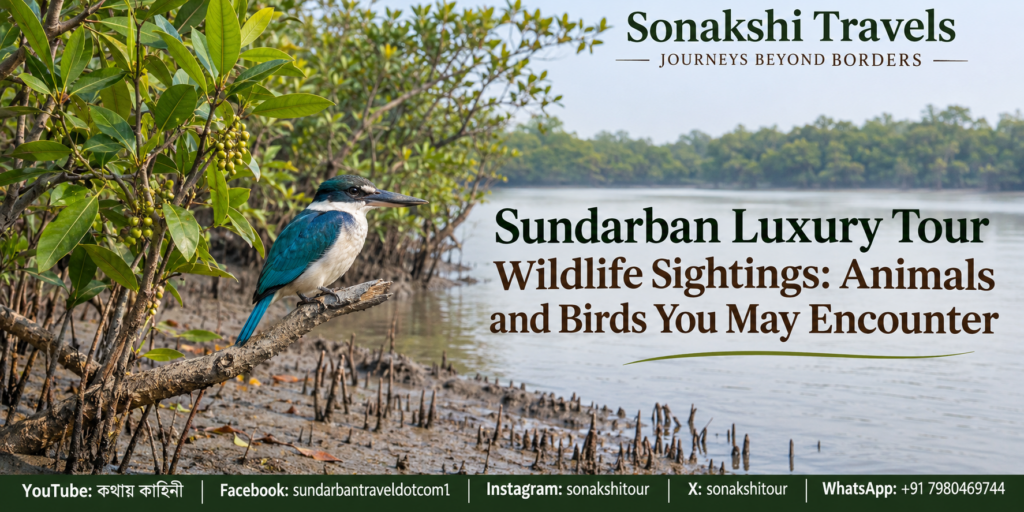
A Sundarban luxury wildlife safari offers far more than the possibility of seeing a Royal Bengal Tiger. Along the tidal rivers and mangrove-covered islands of the Indian Sundarbans, travellers may encounter spotted deer feeding beside exposed mudbanks, saltwater crocodiles resting near the water, rhesus macaques moving through overhanging branches, and colourful kingfishers watching for fish. A carefully planned Sundarban Tour Private Wildlife Safari provides opportunities to observe these animals and birds from a comfortable boat while appreciating the natural rhythms of the mangrove ecosystem. However, wildlife appearances are never guaranteed, and understanding which species are relatively approachable, occasionally visible, or exceptionally elusive helps travellers develop realistic expectations.
The Indian Sundarbans are part of an extraordinary tidal landscape where the boundaries between land and water continually change. Wildlife has adapted to mangrove forests, saline and brackish waterways, muddy islands, and seasonal environmental changes. Some animals are conspicuous during daylight, while others remain hidden within dense vegetation or become active mainly after sunset. Birds occupy different ecological niches, from small kingfishers along narrow creeks to large raptors surveying rivers and wetlands from elevated branches.
For travellers planning a private safari, the most useful question is not simply how many wildlife species inhabit the Sundarbans, but which animals and birds can realistically be observed during authorised daytime excursions. This guide introduces the region’s characteristic mammals, reptiles, aquatic wildlife and birds, explains where different sightings may occur, and examines how patient observation, experienced guiding and sensible itinerary planning can enrich a wildlife-focused journey without disturbing the forest or its inhabitants.
Understanding Wildlife Sightings in the Indian Sundarbans
The Indian Sundarbans form part of the world’s largest mangrove forest system, shared by India and Bangladesh. UNESCO recognises Sundarbans National Park for its exceptional ecological processes and important wildlife, including tigers, aquatic mammals, birds and reptiles. Yet the presence of an animal in the wider landscape does not mean that tourists are likely to encounter it during a regular boat safari.
This distinction matters because most wildlife tourism takes place along authorised waterways and observation areas. Travellers generally watch from boats, designated watchtowers and approved visitor facilities rather than walking freely through forest interiors. Dense mangroves frequently conceal animals, while changing tides alter the amount of shoreline visible above water.

The official Sundarban Tiger Reserve annual report for 2024–25 includes direct monitoring records for deer, macaques, wild boar, crocodiles, water monitors, otters, dolphins, fishing cats and other wildlife. These records establish that the animals are being observed within the reserve, but they are not tourist sighting probabilities. Monitoring patrols and ordinary tourism journeys differ in coverage, observation effort and access.
An excellent safari should therefore be judged by the quality of wildlife observation and interpretation rather than the total number of species photographed. Watching a kingfisher hunt, a crocodile move into tidal water or a deer herd react to activity in the forest can be genuinely rewarding.
Mammals You May Encounter During a Sundarban Wildlife Safari
Mammals attract considerable interest because they include the Sundarbans’ famous tiger and several smaller, less familiar animals. Their visibility differs enormously according to behaviour, habitat, time of day and the position of the observation boat.

1. Royal Bengal Tiger (Panthera tigris tigris)
The Royal Bengal Tiger is the most celebrated wild animal of the Sundarbans. Unlike tigers associated with relatively open grassland and dry deciduous forests, Sundarban tigers inhabit a complex landscape of islands, tidal channels and dense mangrove vegetation. They are capable swimmers and may cross waterways while moving through their territories.
Tourists occasionally observe a tiger walking along an exposed bank, emerging from vegetation or swimming across a channel. Such encounters are exceptional and unpredictable. The presence of a healthy tiger population does not translate into a fixed chance of seeing one during a particular trip. Travellers should regard a sighting as a fortunate wildlife encounter, not a guaranteed service.
2. Spotted Deer or Chital (Axis axis)
Spotted deer are among the most recognisable mammals visitors may observe along suitable Sundarban forest edges. Their reddish-brown coats, decorated with distinct white spots, stand out against exposed mud and green vegetation. Groups may feed along the riverbanks or browse near mangrove trees, particularly where natural food is accessible.
Deer are important prey for tigers and an essential part of the local food web. Their alert posture, feeding patterns and interactions within a group can be interesting to observe. Travellers sometimes notice deer near rhesus macaques, an association that can occur when monkeys drop edible plant material from trees.
3. Rhesus Macaque (Macaca mulatta)
Rhesus macaques are adaptable primates frequently associated with the forest canopy and tidal vegetation. During a river safari, they may be visible moving between branches, sitting on exposed trunks or feeding on leaves and fruits. Their social behaviour often makes them engaging subjects for patient observers.
Macaques are also capable swimmers, an important adaptation in a landscape divided by creeks. Travellers should observe them without offering food or encouraging contact. Feeding wild primates changes their natural behaviour and can create unsafe interactions.
4. Wild Boar (Sus scrofa)
Wild boar inhabit the mangrove forest and may forage near muddy banks, vegetation edges or exposed ground. Their robust bodies, elongated snouts and dark coats distinguish them from spotted deer. They consume a varied diet, and their movements are connected with feeding opportunities throughout the forest.
A boar may remain visible only briefly before retreating into vegetation. Visitors should pay attention to movement along the boundary between open mud and forest cover, especially when the boat is moving slowly enough for careful observation.
5. Fishing Cat (Prionailurus viverrinus)
The fishing cat is a remarkable wetland-adapted feline and the state animal of West Bengal. It has a sturdy body, comparatively short legs and a patterned coat. Fish and other aquatic prey form an important part of its diet, making mangrove mudflats and wetland margins suitable habitat.
Fishing cats are mainly nocturnal, although daytime activity is possible. The Sundarban Tiger Reserve has conducted dedicated population studies of the species, but sightings during ordinary tourist safaris should still be regarded as uncommon. Travellers should not confuse a fishing cat with a tiger cub or a domestic cat seen near settlements.
6. Leopard Cat (Prionailurus bengalensis)
The leopard cat is another small wild feline documented in the Sundarbans landscape. Its spotted coat and relatively slender build distinguish it from the more robust fishing cat. Because it is secretive and often active during periods unsuitable for normal tourism, direct sightings are particularly difficult.
Its inclusion among the Sundarbans’ wildlife should be understood as an indication of regional biodiversity rather than a realistic expectation for a short sightseeing cruise.
7. Smooth-coated Otter (Lutrogale perspicillata)
Smooth-coated otters are associated with waterways and wetland habitats. Their streamlined bodies, strong tails and swimming ability make them well suited to aquatic environments. Visitors may occasionally notice an otter swimming, surfacing or moving along a suitable bank, although it can disappear quickly.
Otter encounters may be brief and distant, so binoculars are particularly useful. Even when an animal’s identity is uncertain, observing its swimming style and behaviour can help an experienced guide distinguish it from other aquatic wildlife.
Reptiles, Crocodiles and Aquatic Wildlife of the Sundarbans
The Sundarbans’ waterways and exposed tidal banks support species whose lives are closely connected with water. Some are comparatively conspicuous, while others are rarely observed during standard river cruises.
8. Saltwater Crocodile (Crocodylus porosus)
Also called the estuarine crocodile, this formidable reptile is an important predator in the Sundarbans. It may rest on exposed muddy banks, remain partly submerged near a shoreline or move quietly through tidal water. Its heavily scaled body, elongated jaws and powerful tail make it visually distinctive.
Crocodiles are among the notable reptiles that visitors may encounter, but sightings depend on location, tide and animal behaviour. Observation should always take place from authorised and appropriately positioned boats or visitor facilities. Travellers must never approach the water’s edge to obtain a closer photograph.
9. Asian Water Monitor (Varanus salvator)
The Asian water monitor is a large lizard with a powerful tail, muscular limbs and a distinctive reptilian appearance. It can swim effectively and may be seen on muddy banks, among roots or near water. From a distance, an inexperienced observer might briefly mistake its movement for that of a small crocodile.
Its body proportions, narrower head and limb movements usually help distinguish it from a crocodile. Water monitors offer excellent opportunities to study reptile behaviour when an individual remains exposed long enough for careful observation.
10. River Dolphins
The Sundarbans and surrounding estuarine waterways are associated with several aquatic mammals, including the Irrawaddy dolphin (Orcaella brevirostris) and Ganges river dolphin (Platanista gangetica). Scientific references also document the Indo-Pacific finless porpoise in the wider estuarine region.
A dolphin may briefly surface, exposing part of its back before disappearing beneath the water. Such encounters can be difficult to identify accurately because water conditions, distance and the short duration of surfacing limit visibility. Visitors should avoid assuming that every distant movement in the river is a dolphin.
Different dolphin species use different aquatic habitats and are not equally likely to be encountered on ordinary tourist routes. Species-specific identification should be left to knowledgeable observers when sufficient features are visible.
11. Turtles and Terrapins
The Northern River Terrapin (Batagur baska) is one of the Sundarbans’ important conservation species. Its presence reflects the ecological value of tidal waterways and coastal habitats, but visitors should not expect routine sightings. Conservation and recovery initiatives are particularly important for this rare reptile.
Olive Ridley sea turtles (Lepidochelys olivacea) are also associated with the wider coastal environment. However, their presence in the region does not imply that they will be visible during an inland mangrove cruise. Ordinary tourist routes and open coastal turtle habitats are not interchangeable.
12. Snakes of the Mangrove Landscape
The Sundarbans support several snake species, including cobras and other venomous snakes. These animals are important components of the ecosystem, but they are generally concealed within vegetation, on the forest floor or in other protected microhabitats.
Routine tourist encounters are unpredictable, and a boat-based safari is not an appropriate setting for deliberately searching inaccessible forest areas for snakes. If one is observed from an authorised location, visitors should maintain distance and allow the animal to move naturally.
Birds You May See on a Sundarban Luxury Wildlife Safari
Birdwatching is one of the strongest reasons to explore the Sundarbans beyond tiger tracking. The official Sundarban Tiger Reserve avifauna information reports more than 400 resident and migratory bird species recorded across the wider Sundarban Biosphere Reserve. This is a regional biodiversity figure, not the number a visitor should expect to see in one trip.
The diversity reflects the range of habitats available: narrow mangrove creeks, riverbanks, exposed intertidal mud, open water, forest edges and inland wetland environments. Each supports birds with different feeding strategies and daily activity patterns.
13. Brown-winged Kingfisher (Pelargopsis amauroptera)
The brown-winged kingfisher is a particularly appealing bird for visitors interested in mangrove-specialist wildlife. Its rich orange head and body, brown wings and large reddish bill create a distinctive appearance. It may perch quietly near tidal waterways while watching for prey.
It is best approached through patient scanning rather than rapid boat movement. A kingfisher may remain motionless for a period and then fly suddenly between branches or across a narrow creek.
14. Common Kingfisher (Alcedo atthis)
The common kingfisher is small but brilliantly coloured, with vivid blue upperparts and warm orange underparts. It often uses low perches beside water, watching for small fish. Its compact size can make it surprisingly difficult to detect against vegetation despite its bright plumage.
A successful photograph may require considerable patience, particularly when the bird chooses a shaded perch or sits far from the observation boat.
15. White-throated Kingfisher (Halcyon smyrnensis)
The white-throated kingfisher is a colourful and adaptable species, recognised by its prominent white throat and breast patch, chestnut-coloured head and body, bright blue wings and red bill. It is not restricted to mangroves but occurs across many wetland and open habitats.
Visitors may observe it perched on branches, poles or other vantage points where suitable. Its varied diet means that it does not depend exclusively on catching fish.
16. Black-capped Kingfisher (Halcyon pileata)
The black-capped kingfisher combines a dark head, contrasting white collar, reddish bill and striking blue upperparts. It is associated with coastal and wetland environments and can be an especially rewarding bird to identify during a mangrove excursion.
Its appearance differs from both the common and white-throated kingfishers. Photographers should look carefully at bill colour, head pattern and overall size when identifying distant individuals.
17. Collared Kingfisher (Todiramphus chloris)
The collared kingfisher is associated with coastal habitats, mangroves and tidal shores. Its pale underparts, blue-green upperparts and prominent light collar make it distinctive. Individuals may occupy branches overlooking muddy creek edges where crustaceans and other small prey are available.
It is a useful species for understanding how different kingfishers exploit the same broad ecosystem without occupying precisely identical feeding niches.
18. Pied Kingfisher (Ceryle rudis)
Unlike many kingfishers that hunt from perches, the pied kingfisher is well known for hovering over water before diving towards fish. Its black-and-white plumage is distinctive, particularly when the bird holds position in the air above an open water surface.
Watching its hunting behaviour can be as interesting as photographing the bird itself. It may offer an excellent opportunity to appreciate the relationship between river conditions and bird feeding activity.
19. Stork-billed Kingfisher (Pelargopsis capensis)
The stork-billed kingfisher is a large kingfisher with a powerful red bill, substantial head and colourful plumage. Its size distinguishes it from smaller species, although a clear view is still needed for identification.
A perched individual may be visible on an overhanging branch along a suitable creek. Its impressive bill is adapted for handling a range of aquatic prey, including fish and other small animals.
Raptors, Herons and Other Waterbirds Worth Watching
Kingfishers are visually attractive, but the Sundarbans also support impressive birds of prey and a wide range of waterbirds. Many can be studied from boats without entering sensitive forest habitats.
20. White-bellied Sea Eagle (Icthyophaga leucogaster)
The white-bellied sea eagle is a striking raptor associated with coastal waters and large river systems. Adults have contrasting pale heads and underparts with darker wings. A bird may be observed perched prominently above a waterway or flying over an open channel.
Its broad wings and powerful flight make it a memorable subject. Juvenile birds can look substantially different from adults, so identification should consider age-related plumage.
21. Osprey (Pandion haliaetus)
The osprey is a fish-eating raptor often associated with large water bodies, rivers and coastal habitats. Its white head, dark eye stripe, long wings and specialised fishing behaviour help distinguish it from other birds of prey.
An osprey may perch near a river or circle above the water while searching for fish. Watching one dive towards its prey is an exciting possibility, although hunting behaviour and successful captures cannot be predicted.
22. Brahminy Kite (Haliastur indus)
The Brahminy kite is a familiar coastal raptor, identifiable in adult plumage by its white head and breast contrasting with a rich chestnut body and wings. It frequently uses waterways, mudflats and coastal environments where suitable feeding opportunities exist.
Its graceful flight and distinctive colouring make it a rewarding bird for both beginners and experienced wildlife photographers.
23. Lesser Adjutant (Leptoptilos javanicus)
The lesser adjutant is a large stork associated with wetlands and suitable forested habitats. Its substantial bill, long legs and characteristic body proportions distinguish it from herons and smaller wading birds. It is a conservation-significant species, and a sighting should be treated as special rather than routine.
Visitors should observe large wading birds carefully rather than assume every distant tall bird is an adjutant stork.
24. Grey Heron (Ardea cinerea)
Grey herons are tall, long-necked waterbirds that hunt fish and other aquatic prey. Their patient feeding behaviour can be fascinating: an individual may stand almost motionless for an extended period before striking rapidly with its bill.
Shallow water, exposed banks and quiet creek margins are suitable places to look for them. A heron’s apparent stillness should not be mistaken for inactivity; it is often an essential part of its hunting strategy.
25. Purple Heron (Ardea purpurea)
Purple herons have a slender appearance and rich brownish, purplish and grey tones. They frequently use vegetated wetlands, where their colouring and elongated posture can make them difficult to detect.
A carefully observed individual may reveal subtle plumage details that are easily missed during a fast-moving excursion. Watching for slow movements among reeds or vegetation can help locate birds that initially appear almost invisible.
26. Little Cormorant (Microcarbo niger)
Little cormorants are dark aquatic birds commonly associated with inland wetlands and waterways. They swim and dive in pursuit of fish, sometimes remaining underwater long enough to reappear at a surprising distance from their previous position.
Visitors may also see cormorants resting on exposed branches. Their characteristic wing-spreading posture can provide a particularly interesting opportunity to observe and photograph waterbird behaviour.
Other birds worth watching for include Asian openbills, black-headed ibis, Indian pond herons, lesser whistling ducks and seasonal shorebirds such as the common redshank. Identification and encounter opportunities depend on habitat, season and the specific waterways visited.
Where Are Wildlife Sightings Most Likely to Occur?
Different parts of the tidal landscape provide different observation opportunities. Recognising the relationship between an animal and its habitat is often more useful than memorising a list of species.
| Habitat | Wildlife to Look For | Observation Advice |
|---|---|---|
| Exposed tidal mudbanks | Spotted deer, crocodiles, water monitors, wild boar and shorebirds | Scan slowly and observe from a safe distance. |
| Overhanging mangrove branches | Kingfishers, macaques, raptors and other woodland birds | Use binoculars to check shaded perches. |
| Open river channels | Ospreys, sea eagles, waterbirds and occasionally aquatic mammals | Watch both the water surface and nearby elevated perches. |
| Dense forest margins | Deer, macaques and occasionally elusive mammals | Look for subtle movement rather than expecting open views. |
| Designated watchtower surroundings | Deer, birds, reptiles and occasionally other wildlife | Remain within permitted visitor areas and follow the guide. |
Sajnekhali and Sudhanyakhali are among the recognised tourism locations associated with wildlife interpretation and observation. Dobanki is another established visitor location within the wider safari network. None should be regarded as a guaranteed place to see a particular species.
Travellers interested in comfortable wildlife observation can consult the Sundarban Luxury Tour Wildlife Safari Guide for a broader explanation of the private safari experience.
How a Private Wildlife Safari Improves the Observation Experience
The practical advantage of a private safari is not exclusive access to wildlife, but the ability to organise the tour around the interests of a particular group. A couple interested in birds may prefer prolonged observation of creek-side perches, while a wildlife photographer may wish to devote more attention to changing light and animal behaviour.
A properly arranged private boat can provide a quieter environment, greater flexibility within authorised routes and more personal space for binoculars and cameras. The actual advantages depend on the vessel, itinerary and guide arrangement rather than the label attached to the package.
Travellers exploring private luxury Sundarban safari packages should confirm the number of wildlife observation days, the boat’s viewing arrangements, naturalist or guide services and whether the itinerary gives sufficient attention to birdwatching as well as larger mammals.
A private group can often communicate its interests more easily to the guide. However, forest authorities control permitted routes, and no private operator can legitimately promise entry to prohibited waterways or unrestricted access to sensitive habitats.
International travellers comparing a Sundarban luxury tour package should also ask whether the itinerary prioritises wildlife observation or includes a larger proportion of general sightseeing. This distinction can make a significant difference to the experience, especially for photographers and bird enthusiasts.
Practical Wildlife Photography and Birdwatching Tips
Successful wildlife observation depends more on attention and patience than on expensive equipment. Visitors who learn to examine different layers of the landscape often notice far more than those concentrating only on the possibility of a tiger.
- Carry binoculars: They help locate distant birds, animals on the opposite bank and subtle movement inside vegetation.
- Keep the camera ready: Wildlife may remain visible for only a few seconds before returning to cover.
- Use an appropriate telephoto lens: A longer focal length allows distant subjects to be photographed without disturbing them.
- Watch animal behaviour: Feeding, resting, grooming and hunting behaviour can be more interesting than a static portrait.
- Protect equipment: Humidity, river spray and changing weather can affect cameras and lenses.
- Remain quiet: Loud conversations and sudden movements can distract fellow travellers and interfere with observation.
Soft morning light can be particularly attractive for photography, while overcast conditions sometimes reduce harsh shadows. Neither condition guarantees more wildlife activity. Tides and changing water levels may expose additional mud or alter the visibility of riverbanks, but they cannot be used to predict precisely when an animal will appear.
A longer journey may provide additional observation opportunities, but travellers should distinguish total tour duration from actual time inside permitted wildlife-viewing areas. Those comparing a private Sundarban wildlife tour should ask about full safari days, boat facilities and the practical arrangements for photographers.
Frequently Asked Questions About Sundarban Wildlife Sightings
Which animals are relatively easier to see during a Sundarban safari?
Spotted deer and rhesus macaques are among the more practical mammals to look for during suitable daytime excursions. Crocodiles, wild boar and water monitors may also be observed. Actual sightings vary with habitat, route, tide, weather and animal behaviour.
Can tourists see a Royal Bengal Tiger on a private safari?
Yes, a tiger sighting is possible, but it is never guaranteed. Dense vegetation and the animal’s movements make encounters unpredictable. Private touring can improve observation comfort and itinerary focus without controlling where a tiger will appear.
Which birds are particularly interesting in the Sundarbans?
Kingfishers are especially attractive, including brown-winged, common, white-throated, black-capped, collared, pied and stork-billed kingfishers. Raptors such as the white-bellied sea eagle, osprey and Brahminy kite are also worth watching for, along with herons, cormorants and other waterbirds.
Are dolphins commonly visible during Sundarban river cruises?
Aquatic mammals occur in the wider Sundarbans waterways, but dolphin sightings depend on the water body and species. They should not be promised as a routine feature of every tourist cruise. Even when dolphins surface, brief views may make identification difficult.
Is a two-day or three-day safari better for wildlife observation?
A longer itinerary can provide more cumulative time for observing different habitats and species. Two or three well-planned wildlife days may therefore be preferable for serious nature enthusiasts, provided the itinerary includes sufficient actual forest observation time. Additional days do not guarantee particular sightings.
Can visitors walk inside the mangrove forest to photograph animals?
Tourist access is regulated and generally takes place through authorised boat routes and designated visitor facilities. Travellers should not expect unrestricted walking access into protected forest areas. Wildlife must be observed responsibly and in accordance with current forest department regulations.
Appreciating the Full Diversity of Sundarban Wildlife
The Sundarbans offer a remarkable opportunity to observe wildlife that has adapted to one of the world’s most distinctive tidal landscapes. Spotted deer and rhesus macaques may provide memorable encounters along forest edges, while crocodiles, water monitors and occasional aquatic mammals reveal the ecological importance of the waterways. Kingfishers, eagles, herons and other birds add colour, movement and fascinating behaviour throughout the journey.
The most rewarding Sundarban Tour Private Wildlife Safari is not necessarily the one with the longest wildlife checklist. It is the experience that allows travellers to observe animals naturally, understand their habitats and appreciate the uncertainty of genuine wildlife encounters. Rare mammals and endangered reptiles deserve particular respect, even when they remain unseen.
For travellers seeking a comfortable, wildlife-focused experience, Sonakshi Travels can help arrange private Sundarban journeys with guided river exploration and personalised travel arrangements. Choosing a suitable itinerary and allowing enough observation time are sensible first steps towards experiencing the region’s biodiversity responsibly.
Explore Our Latest and Updated Travel Guides
-
Luxury Sundarban Private Tour Cost: What Do You Get for the Higher Price?
Luxury Sundarban Private Tour Cost: What Do You Get for the Higher Price? Luxury in the Sundarbans has a rather different meaning from luxury in a metropolitan hotel or an international beach resort. It is expressed through the freedom to explore a magnificent tidal wilderness with your chosen companions, the comfort of returning to carefully selected accommodation and the reassurance that every important aspect of…
-
What Does Luxury Mean in the Sundarbans? Beyond Five-Star Rooms and Expensive Cars
What Does Luxury Mean in the Sundarbans? Beyond Five-Star Rooms and Expensive Cars At first glance, luxury travel appears easy to define. A sophisticated hotel, an expensive vehicle, beautifully presented meals and attentive hospitality are familiar indicators of a premium holiday. Yet a Sundarban luxury tour invites travellers to reconsider these conventional measures of indulgence. In a destination where tidal rivers determine the rhythm of…
-
Why True Sundarban Luxury Is Space, Time and Personal Attention
Why True Sundarban Luxury Is Space, Time and Personal Attention There is a particular kind of luxury that cannot be adequately described through the photographs of an expensive hotel room. It is experienced in the quiet moments of a journey, when there is no need to hurry, no competition for a comfortable seat and no obligation to adjust every personal preference to the expectations of…
-
How to Choose a Genuine Sundarban Private Tour Operator: 15 Questions to Ask Before Booking
How to Choose a Genuine Sundarban Private Tour Operator: 15 Questions to Ask Before Booking Choosing a genuine Sundarban private tour operator is one of the most important decisions you will make before exploring India's remarkable mangrove wilderness. A beautifully designed website may promise an exclusive boat, comfortable accommodation, experienced naturalists and unforgettable wildlife encounters. Yet these attractive descriptions do not always explain how the…
-
Sundarban Luxury Tour Crocodile and Deer Spotting: Beyond the Famous Bengal Tiger
Sundarban Luxury Tour Crocodile and Deer Spotting: Beyond the Famous Bengal Tiger A Royal Bengal Tiger may be the most celebrated animal of the Indian Sundarbans, but two other remarkable inhabitants often make a wildlife safari equally fascinating: the saltwater crocodile and the spotted deer. Crocodiles may rest almost motionless on exposed tidal mudbanks, while groups of chital deer feed along mangrove margins or emerge…
-
Sundarban Luxury Tour Full-Day Jungle Safari: What Happens from Morning to Evening?
Sundarban Luxury Tour Full-Day Jungle Safari: What Happens from Morning to Evening? A full-day jungle safari in the Indian Sundarbans is an experience shaped by tidal rivers, dense mangrove forests, changing wildlife activity and the quiet rhythm of travelling by boat. Unlike conventional jeep safaris, visitors explore the protected landscape through authorised waterways, observing forest banks and stopping at designated tourism facilities where permitted. A…
-
Sundarban Luxury Tour Morning Safari Experience: Light, Wildlife and River Landscapes
Sundarban Luxury Tour Morning Safari Experience: Light, Wildlife and River Landscapes Morning brings a distinctive atmosphere to the mangrove waterways of the Indian Sundarbans. Soft daylight gradually reveals the forest margins, reflections move across tidal rivers, and the sounds of birds become part of the experience of travelling through this remarkable landscape. For visitors planning a Sundarban Tour Private Wildlife Safari, a well-organised morning excursion…
-
Sundarban Luxury Tour Safari Safety: Understanding Wildlife Rules and Responsible Travel
Sundarban Luxury Tour Safari Safety: Understanding Wildlife Rules and Responsible Travel Safety is an essential part of experiencing the wild mangrove waterways of the Indian Sundarbans. A luxury safari may provide a comfortable private boat, experienced service team and personalised wildlife interpretation, but these advantages must operate within the safety requirements and conservation regulations established for the protected forest. Travellers booking a Sundarban Tour Private…
-
Sundarban Luxury Tour Watchtower Guide: Sajnekhali, Sudhanyakhali and Dobanki
Sundarban Luxury Tour Watchtower Guide: Sajnekhali, Sudhanyakhali and Dobanki The watchtowers of Sajnekhali, Sudhanyakhali and Dobanki offer three different ways to experience the remarkable mangrove landscape of the Indian Sundarbans. Sajnekhali introduces travellers to the forest through wildlife interpretation and designated observation facilities, Sudhanyakhali provides views towards a freshwater pond and surrounding mangrove habitat, while Dobanki is particularly recognised for its elevated canopy walkway. For…
-
Sundarban Luxury Tour Safari Permits: Entry Rules, Guides and Boat Requirements
Sundarban Luxury Tour Safari Permits: Entry Rules, Guides and Boat Requirements Planning a private wildlife safari in the Indian Sundarbans involves more than selecting a comfortable boat and arranging accommodation. Every legitimate journey into the protected tourism areas must respect forest entry permissions, authorised guides, boat registration requirements and conservation regulations. These arrangements are particularly important for travellers booking a Sundarban Tour Private Wildlife Safari,…
Turn Your Sundarban Plans into a Personalised Quotation
Tell Sonakshi Travels who is travelling and what you have in mind. Request availability, suitable stay options, and a clear package price for your party.
Prefer to speak directly? WhatsApp +91 7980469744 or call Sonakshi Travels.