Sundarban Luxury Tour Safety Guide for Foreign Tourists: Health, Hygiene and Practical Tips
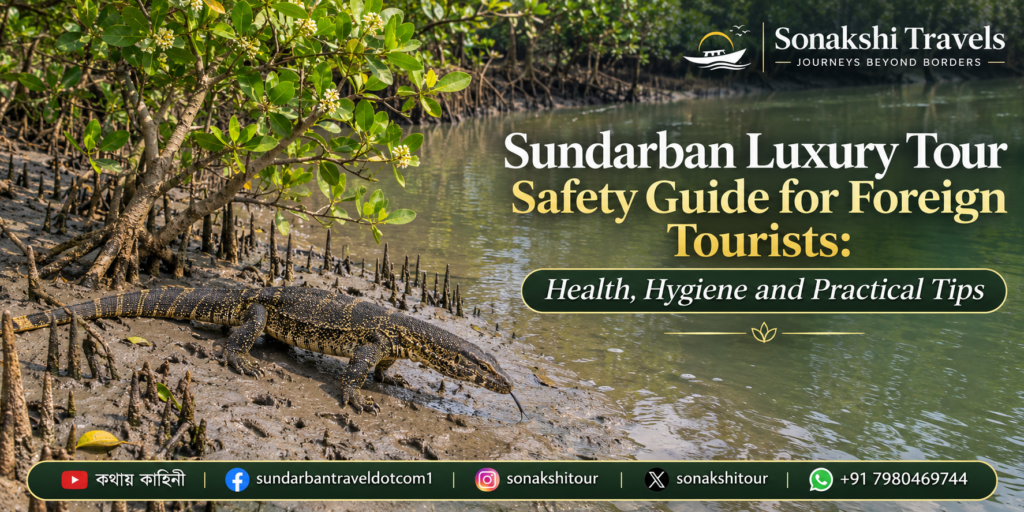
A Sundarban luxury tour can be a comfortable way for foreign tourists to experience the tidal mangrove forests of eastern India, but thoughtful safety planning remains essential. The journey involves road transfers from Kolkata, boarding a tourist boat, spending long hours on tidal waterways and staying in accommodation where facilities may differ from those in major international cities. For International Travellers for Sundarban Tour planning, the important precautions concern safe boat operations, drinking water, food hygiene, mosquito protection, sun exposure, personal medication and emergency arrangements. Understanding these practical matters before departure helps guests make informed choices about private tour services and enjoy the natural environment with greater confidence.
The Sundarbans are not an ordinary resort destination. Tides change water levels, muddy landing areas can become slippery, and the protected forest is home to wild animals, including Royal Bengal tigers and estuarine crocodiles. Visitors normally observe the forest from registered tourist launches and permitted visitor locations rather than walking independently through the mangroves. A private boat, experienced crew and organised meals can improve comfort, but none of these services eliminates environmental hazards or replaces the need to follow forest regulations.
This guide explains how international visitors can evaluate safety arrangements before booking and take sensible precautions throughout the holiday. It covers boat equipment, jetty boarding, clean food and water, insects, travel-health preparation, weather, suitable accommodation, senior travellers and emergency response. Guests planning their wider journey may also consult the complete Sundarban luxury travel guide for international visitors. Here, the emphasis is specifically on health, hygiene and practical safety decisions that can materially affect a private wildlife holiday.
1. Understanding Safety in a Remote Mangrove Wildlife Destination
The first step towards safer travel is understanding the environment. The Indian Sundarbans consist of tidal rivers, creeks, mudbanks, islands and extensive mangrove vegetation. Boats provide access to designated tourism areas, while the movement of water influences boarding conditions, navigation and the visibility of riverbanks. Weather can change, particularly during periods of rain, storms or strong winds.
Unlike a conventional city holiday, medical facilities may not be immediately accessible from every river location. The time required to obtain help can depend on the vessel’s position, communication facilities, river conditions and the availability of transport. This makes preparation more important than assuming that assistance will always arrive quickly.
What Does a Private Luxury Tour Improve?
A well-organised private tour can reduce certain everyday inconveniences. Guests may travel in a dedicated air-conditioned vehicle, use a boat reserved for their party and receive assistance with luggage, meals and the daily programme. Having a coordinating tour manager or guide can also simplify communication when plans need to change.
However, private travel should never be confused with an exemption from safety procedures. Tidal movement, changing weather and wildlife remain outside the operator’s control. The essential questions are whether the crew is competent, the boat is properly equipped and the itinerary respects the regulations governing the protected area.
Safety Is More Than the Price of a Package
Expensive accommodation or attractive photographs of a tourist launch do not establish that an entire tour is well managed. A responsible operator should be able to explain the boat’s safety equipment, passenger capacity, guiding arrangements, food preparation, weather-related decisions and emergency communication procedures.
Before comparing room categories, ask how the operator manages practical risks. Clear answers are more valuable than broad promises that a tour is completely safe, because no travel company can eliminate every risk in a remote natural environment.
2. Private Boat Safety: What Foreign Tourists Should Check
Boat safety deserves particular attention because guests may spend most of their safari day on the water. The Sundarban Tiger Reserve’s official rules identify important equipment and operating requirements for tourist boats, including sufficient life jackets, a first-aid box, a fire extinguisher and adherence to prescribed passenger limits and routes.
International travellers should check these arrangements with their operator before booking. The fact that a boat is described as deluxe or private is not, by itself, confirmation that every necessary safety measure has been implemented.
Life Jackets and Passenger Capacity
The vessel should carry an appropriate life jacket for every passenger, along with the safety equipment required under applicable rules. Ask where the life jackets are stored, whether suitable sizes are available for children and how passengers should use them. Follow the crew’s instructions about when a jacket must be worn.
Passenger limits also matter. A private boat should not carry more people than its authorised capacity simply to accommodate an additional group. Capacity affects the vessel’s safe operation and the availability of suitable seating and movement space.
First-Aid Equipment and Fire Protection
The official Tiger Reserve rules specify a first-aid box and fire extinguisher among essential boat equipment. A first-aid box can help manage minor problems, but it is not a substitute for professional medical care. Travellers should not assume that a boat carries advanced medical equipment or that crew members have clinical qualifications.
A sensible pre-departure briefing should explain basic safety procedures, important movement restrictions and how to contact the crew in an emergency. Guests should also know which areas of the vessel are accessible and where they should remain during boarding or difficult river conditions.
Safe Movement on the Observation Deck
An elevated viewing deck can be a useful feature of a tourist launch, but movement requires care. Wet surfaces, sudden turns or changes in the vessel’s motion may affect balance. Guests should use handrails where available, avoid leaning beyond protective barriers and refrain from moving around unnecessarily during difficult conditions.
Photography equipment should be positioned so that it does not block walkways or emergency access. A tripod or large camera bag can become a tripping hazard if left unsecured. Visitors should never stand on railings or unstable furniture to obtain a better photograph.
When evaluating a private Sundarban luxury tour package, request confirmation of the actual vessel, safety arrangements and facilities offered for your travel dates.
Why the Captain’s Decisions Must Take Priority
A private boat gives the group greater privacy, but it does not give passengers authority over navigation decisions. The captain must consider weather, tides, visibility, authorised routes and vessel safety. An excursion may need to be shortened, delayed or adjusted if conditions become unsuitable.
Travellers should regard these decisions as an essential part of responsible operation rather than a failure to deliver a luxury service. No wildlife sighting or photographic opportunity justifies unsafe navigation.
3. Food Hygiene and Safe Drinking Water During a Sundarban Tour
Food and water hygiene are important for visitors who may be unfamiliar with the local environment. Many private Sundarban tours include meals prepared aboard a tourist launch, while dinner may be provided at a hotel or resort. The quality of these arrangements depends on food storage, clean preparation areas, safe water and appropriate handling by the service team.
The US Centers for Disease Control and Prevention identifies contaminated food and beverages as important causes of travellers’ diarrhoea in India. Fully cooked meals served hot are generally preferable to food that has been stored at an unsuitable temperature or handled unhygienically.
Choosing Safe Drinking Water
Drink water from a source that is reliably treated and safe for consumption. This may include properly sealed packaged water where permitted or water supplied through a suitably maintained purification system. Do not drink untreated river water or assume that water from an unfamiliar tap is safe.
The Sundarban Tiger Reserve restricts single-use plastics within the protected area, so drinking-water arrangements should respect conservation rules. Ask how the operator provides safe water without relying on prohibited disposable containers. Refillable bottles can be useful when filled from a verified safe source.
Freshly Prepared Food and Temperature Control
Onboard cooking can be part of a comfortable private tour, but food safety requires proper hygiene. Meals should be prepared using clean utensils and safe water, with appropriate separation of raw and cooked ingredients. Food that needs refrigeration should be stored at safe temperatures, particularly during hot weather.
Guests may prefer freshly cooked rice, vegetables, fish, chicken or other agreed dishes. Raw salads, unpasteurised dairy products, ice of uncertain origin and food left unrefrigerated for long periods deserve particular caution. The aim is not to avoid local cuisine, but to enjoy it through reliable preparation and handling.
Food Allergies and Special Diets
Travellers with allergies should communicate their requirements before the tour begins. A general request for vegetarian or mildly spiced food is different from a severe allergy requiring strict ingredient control. Small onboard kitchens may use shared equipment, and complete prevention of cross-contact cannot always be guaranteed.
For serious allergies, discuss ingredients, food handling and emergency medication with the operator, and obtain professional medical advice before travel. Carry prescribed emergency treatment where appropriate and ensure travelling companions know how to respond.
Hand Hygiene Before Meals
Wash hands with soap and safe water before eating and after using the toilet. When proper handwashing is temporarily unavailable, an appropriate alcohol-based hand sanitiser may help, although washing with soap and water remains important when hands are visibly dirty.
Ask whether the boat has a functional handwashing area, sufficient safe water and a clean onboard washroom. These facilities are valuable throughout a full-day safari and should be assessed as practical necessities, not merely luxury extras.
4. Mosquito Protection, Travel Vaccinations and Personal Health Preparation
A foreign tourist should arrange appropriate travel-health advice before visiting India. The requirements differ according to nationality, previous vaccination history, individual medical circumstances and the wider itinerary. The Sundarbans also involve outdoor activity near vegetation and water, making insect protection a practical consideration.
The CDC identifies mosquito-borne diseases, including dengue, chikungunya and malaria, among the health considerations for India. Actual risk differs by location, season and individual circumstances. Visitors should not select or reject preventive medicines based solely on a general tourism article.
Consult a Travel-Health Professional Before Departure
Arrange a consultation with a qualified travel-health professional sufficiently early to review routine vaccinations, recommended travel immunisations and any relevant mosquito-borne disease precautions. Some travellers may also need to consider entry-related vaccination documentation depending on their previous countries of travel.
UK government travel guidance recommends checking India-specific vaccination and health advice well before departure, and the CDC provides detailed destination health information. Pregnant travellers, people with significant health conditions and those who are immunocompromised should obtain individual advice about whether the journey is suitable.
Preventing Mosquito Bites
Use an effective insect repellent according to its label instructions. Lightweight long-sleeved clothing and long trousers can reduce exposed skin when insects are active. Accommodation should ideally provide suitable screening or other measures to limit mosquitoes entering sleeping areas.
Protection should not be restricted to the evening. Mosquito species responsible for different infections have different biting patterns, and some bite during daylight hours. Reapply repellent as directed, particularly after heavy sweating or washing.
Personal Medicines and Motion Sickness
Carry enough prescribed medication for the entire journey, with an appropriate reserve for unexpected delays. Keep essential medicines in their original packaging and check the Indian rules applicable to controlled or restricted substances. A copy of the prescription or clinician’s letter may be useful where appropriate.
Some guests may experience motion sickness on a boat, even though river travel is different from sailing on the open sea. Anyone with a history of motion sensitivity should discuss suitable preventive treatment with a healthcare professional before travelling. Some medicines cause drowsiness and may not be appropriate for every passenger.
When Illness Requires Medical Attention
Persistent fever, signs of dehydration, severe diarrhoea, breathing difficulties or significant deterioration in health should be assessed promptly by a medical professional. Do not assume that every fever is caused by ordinary travel fatigue or a mild infection.
If a traveller becomes ill during the safari, notify the tour manager or crew immediately so that an appropriate medical assessment and transfer can be arranged. Avoid self-prescribing antibiotics or other medicines without suitable medical guidance.
5. Wildlife Safety and Forest Rules Every Foreign Tourist Should Follow
The Sundarbans are home to potentially dangerous wild animals, including Royal Bengal tigers and estuarine crocodiles. Visitors should enjoy these species from authorised locations while respecting the instructions of the guide and crew. A wildlife sighting must never become a reason to take an unnecessary risk.
Tourism inside the Sundarban Tiger Reserve is regulated, and the official rules restrict activities such as swimming, fishing, diving, unauthorised landing and drone operation. Boats must follow prescribed routes and forest instructions.
Never Enter the Water
The tidal rivers and creeks are not recreational swimming locations. Strong currents, uncertain underwater conditions and the presence of dangerous wildlife make entering the water unsafe. Visitors should never swim from the boat or attempt to retrieve fallen belongings by entering the river.
If an item falls overboard, inform the crew. Passengers should not lean dangerously over the side or try to recover the item themselves. Similar precautions apply while taking photographs near open railings.
Do Not Leave the Boat Without Authorisation
Forest landings are permitted only at authorised tourism locations and under the applicable rules. Visitors must not step onto mudbanks, enter mangrove vegetation or approach wild animals because a section of riverbank appears quiet.
At watchtowers or other permitted visitor facilities, remain within designated areas and follow the ecotourism guide. Fences, walkways and signs are part of the visitor safety arrangements and should not be crossed for photographs.
Do Not Feed or Disturb Animals
Feeding wildlife can alter animal behaviour and create risks for both visitors and animals. Keep food secured, avoid throwing scraps into the river and do not encourage animals to approach the boat. Maintain a respectful distance during sightings.
The reserve’s rules also prohibit loud music inside forest areas and require responsible waste management. Quiet observation is better for wildlife, other visitors and the overall quality of a private nature experience.
No Illegal Night Safari or Unrestricted Access
A premium package does not provide special permission to enter closed channels or operate an unauthorised night safari. Travellers should be cautious of any advertisement suggesting that a higher price permits access beyond conservation rules.
The purpose of a private wildlife tour is to provide comfort and professional coordination within the permitted tourism programme. Responsible operators should explain these limitations before booking.
6. Weather, Sun Exposure and Safe River Travel
Weather conditions influence both comfort and operational safety in the Sundarbans. The region experiences seasonal heat, humidity, rainfall and occasional severe weather systems. Conditions that appear manageable at the resort may differ on an exposed river, where wind and changing water conditions can affect the journey.
Before departure, the tour operator should review the conditions relevant to the selected route and make appropriate operational decisions. Guests should respect postponements or modifications recommended by the crew or required by the authorities.
Heat and Dehydration
Warm weather can cause tiredness, excessive sweating and dehydration, particularly during long observation periods. Drink safe water regularly, rest in shaded areas and avoid prolonged exposure to direct sun. Children, older people and travellers taking certain medicines may require additional precautions.
Symptoms such as dizziness, weakness, headache or nausea should not be ignored. Inform the tour manager if someone appears unwell. Severe confusion, collapse or other signs of serious heat illness require urgent medical attention.
Sun Protection
The reflection of sunlight from the river can increase discomfort during an extended safari. Wear a suitable hat, use sunscreen, protect the eyes with sunglasses and choose lightweight clothing that covers exposed skin without becoming excessively warm.
A covered seating area is useful, but it does not completely remove the need for sun protection. Travellers who spend considerable time on the observation deck should take regular breaks from direct exposure.
Heavy Rain, Storms and River Conditions
Rain can make decks and jetties slippery, while stronger winds may influence river navigation. If local weather warnings or official restrictions affect the excursion, the operator may need to adjust the schedule, use an alternative permitted programme or postpone travel.
Travellers should keep important belongings protected from water and avoid insisting on continuing when the crew considers conditions unsuitable. Wildlife photography and sightseeing should always remain secondary to safe navigation.
Choosing a Suitable Season
The cooler months are generally comfortable for long outdoor excursions. Nevertheless, climate alone does not guarantee safe operating conditions. Even during a popular travel season, individual weather forecasts, river conditions and forest instructions must be considered.
Travellers booking several months in advance should ask about weather-related cancellation, postponement and refund policies. These arrangements are particularly relevant for foreign tourists whose international flight schedules provide limited flexibility.
7. Accommodation Hygiene, Jetty Boarding and Road Transfer Safety
The safety of a Sundarban holiday extends beyond the safari boat. Guests also spend time in road vehicles, river jetties and accommodation. Each stage presents different practical considerations, especially for visitors with large suitcases, mobility limitations or unfamiliarity with local infrastructure.
Clean and Suitable Accommodation
When choosing a resort, examine room cleanliness, bathroom facilities, drinking-water provision, mosquito protection and basic maintenance. Ask whether the accommodation has appropriate electricity arrangements and whether hot water and air-conditioning are available in the selected room category.
An advertised luxury rating does not guarantee an internationally standardised classification. Recent photographs, specific facility descriptions and written confirmation are more useful than a general promotional label. Travellers with allergies or health concerns should discuss any essential room requirements before booking.
Safe Boarding at River Jetties
Boarding conditions may change with the tide. Steps, uneven landing surfaces and differences in height between the jetty and vessel can make luggage handling difficult. Wear footwear with reliable grip, keep hands available for balance and follow the crew’s instructions.
Do not attempt to carry several heavy suitcases onto the boat without assistance. If someone has difficulty with steps or balance, inform the operator in advance so the suitability of the journey can be assessed.
Private Car Transfers from Kolkata
A private air-conditioned vehicle can reduce the need for multiple transport changes. Confirm the number of passengers, available luggage space, seat belts and any required child-restraint arrangements. Guests should wear seat belts where provided and avoid distracting the driver during the road journey.
Allow sensible time for traffic and rest stops. A rushed transfer may create unnecessary pressure on passengers and the driver, particularly when connecting with a boat departure. Guests arriving after a long international flight may benefit from spending the night in Kolkata before continuing.
Travellers comparing a luxury private Sundarban itinerary should assess the comfort and safety of the road, jetty and river stages together rather than focusing only on the hotel.
8. Emergency Preparedness, Travel Insurance and Medical Assistance
Emergency planning is especially important when visiting a remote river environment. Although minor problems can sometimes be managed locally, serious medical emergencies may require transport from the boat to an appropriate medical facility. The availability and speed of assistance depend on the circumstances and location.
India operates a nationwide emergency response system using the number 112. Travellers should save this number, but should not assume that an ordinary mobile call will always connect from every part of the Sundarban waterways. A practical emergency plan should also include the operator’s communication arrangements and nearest suitable points for obtaining help.
Medical and Evacuation Insurance
Foreign visitors should arrange travel insurance appropriate to India and the activities included in their itinerary. Check medical expenses, hospital treatment, emergency transport, medical evacuation and disruption coverage. Some policies contain exclusions or conditions involving particular activities or travel advisories.
Read the policy rather than assuming that every form of wildlife tourism is automatically covered. Travellers with existing medical conditions should disclose the information required by their insurer and confirm any relevant limitations before departure.
What Should the Operator’s Emergency Plan Cover?
Ask how the crew communicates with its coordinator, which river landing points may be used if a passenger needs medical assistance and how transport can be arranged towards an appropriate medical facility. The exact process will depend on the vessel’s location, available communications and medical circumstances.
A tour manager should know how to contact local assistance, but guests should not assume that a naturalist or forest guide is medically trained. In a serious emergency, professional medical assessment is essential.
Emergency Information to Save Before Departure
India emergency response number: 112
Also save your tour coordinator’s phone number, travel insurer’s emergency assistance number, Kolkata accommodation contact and relevant embassy or consulate information.
Keep a written or offline copy because mobile connectivity may vary. In an emergency, alert the crew immediately and seek professional assistance.
Keeping Essential Information Accessible
Carry important contact information, insurance details and a list of essential medications in an accessible location. Guests travelling as a couple or family should ensure that at least one companion knows where these details are stored.
Do not depend entirely on a mobile phone that may run out of battery or have limited network access. A charged power bank and offline itinerary can be useful, although they do not replace a reliable operator communication plan.
9. Practical Safety Checklist for International Travellers for Sundarban Tour
Before paying for a private holiday, it is helpful to compare the safety arrangements of the proposed boat, accommodation and transfers. The objective is not to demand guarantees that no operator can responsibly make, but to identify whether important precautions have been considered.
| Safety Area | What to Verify | Why It Matters |
|---|---|---|
| Boat Safety | Life jackets, capacity, fire extinguisher and first aid | Supports safer river travel |
| Food Hygiene | Safe water, clean preparation and appropriate storage | Reduces food- and water-related illness risks |
| Mosquito Protection | Repellent, suitable clothing and room protection | Helps reduce insect bites |
| Forest Rules | Registered boat, guide and authorised routes | Supports lawful and responsible tourism |
| Accommodation | Bathroom cleanliness, water, electricity and access | Improves comfort and hygiene |
| Medical Planning | Insurance, medication and emergency communication | Supports a more effective response to illness or injury |
Safety Considerations for Senior Travellers
Older visitors may require additional support with jetty boarding, walking on uneven surfaces and managing long periods of sitting. Before booking, discuss mobility, medical needs, suitable seating and the availability of assistance during transfers.
A private tour can often follow a more comfortable pace, but not every vessel or jetty is accessible to all travellers. Suitability should be established individually rather than assuming that a premium booking provides full accessibility.
Travelling with Children
Children require careful supervision around water, boarding areas and elevated decks. Confirm suitable life-jacket sizes and safe seating arrangements before departure. Children should not play near open railings or move around the vessel without appropriate supervision.
Parents should also consider hydration, sun exposure, food preferences and the child’s ability to remain comfortable during lengthy boat excursions. A shorter daily programme may be more suitable than an ambitious itinerary that leaves little time for rest.
Choosing Safety-Conscious Package Arrangements
When comparing a Sundarban luxury holiday package overview, ask for specific details of the boat, guides, meals and transfers. A written quotation should identify what is included, while operational questions should be answered before an advance payment is made.
Travellers should also clarify what happens if unsafe weather prevents the planned excursion. A transparent postponement or refund policy is an important part of responsible holiday planning.
10. Preparing a Safe Private Sundarban Holiday with Sonakshi Travels
Sonakshi Travels arranges private Sundarban tours with options for private road transfers, dedicated tourist launches, meals, local guiding and different accommodation categories. Foreign guests can discuss individual requirements before booking, including food preferences, mobility considerations, luggage, English-speaking naturalist support and suitable travel dates.
Travellers should request confirmation of the particular safety arrangements rather than assuming that every boat or resort has identical facilities. The operator can explain the agreed tour structure, while individual medical suitability, vaccinations and travel insurance remain matters for the traveller and relevant qualified professionals.
Questions to Include in Your Enquiry
Ask about the private boat’s life jackets, safety equipment, onboard washroom, safe drinking-water arrangements, meals, authorised forest guide and emergency communication procedure. Confirm the accommodation category, private vehicle, jetty arrangements and any assistance required for children or senior travellers.
Guests can review the Sonakshi Travels Sundarban tour services and request a personalised written itinerary that reflects their practical needs.
The aim of a well-organised International Travellers Sundarban Luxury Tour Package should be to combine personal comfort with responsible operations. Clear communication, suitable facilities and realistic expectations are more valuable than promises that remove every possible inconvenience or risk.
Frequently Asked Questions About Sundarban Tour Safety
Is a Sundarban luxury tour safe for foreign tourists?
A properly organised tour can provide a managed way to visit the Sundarbans, but no wildlife or river journey is risk-free. Choose a registered tourist boat, confirm safety equipment, follow the required guide and prepare appropriately for health and weather conditions.
Are life jackets required on Sundarban tourist boats?
The Sundarban Tiger Reserve’s official boat rules require sufficient life jackets aboard tourist vessels. Confirm that suitable sizes are available for all passengers and follow crew instructions about their use.
Is food prepared on a private Sundarban boat safe to eat?
Food safety depends on preparation, storage and hygiene standards, not simply on whether the boat is private. Request freshly prepared meals, safe drinking water and clean utensils. Discuss allergies and special dietary needs in advance.
Do foreign visitors need mosquito protection in the Sundarbans?
Yes. Mosquito-bite prevention is sensible when visiting outdoor river and mangrove environments. Use appropriate repellent and protective clothing, and obtain individual travel-health advice about recommended precautions before departure.
What should I do if someone becomes seriously ill during the safari?
Notify the boat crew or tour manager immediately. They should coordinate the appropriate response and help arrange professional medical assistance. India’s emergency number is 112, although communication and response times may vary in remote waterways. Contact your travel insurer’s emergency assistance service as appropriate.
Can senior foreign tourists safely participate in a private Sundarban safari?
Some senior travellers may enjoy a private safari with suitable assistance and a relaxed itinerary. However, jetties and boats may involve steps, uneven surfaces and tidal movement. Discuss medical and mobility needs before booking and seek professional health advice when appropriate.
Safety, Hygiene and Comfort on a Sundarban Luxury Tour
A comfortable Sundarban wildlife holiday depends on more than private transport and attractive accommodation. Foreign visitors should check the safety equipment and operating arrangements of their tourist boat, choose reliable food and drinking-water facilities, prepare for insects and sun exposure, and respect the restrictions governing the protected mangrove forest.
Medical preparation deserves equal attention. Suitable travel insurance, essential medication, professional pre-travel health advice and a realistic emergency communication plan are especially important in a destination where reaching medical facilities may take time. Families and senior travellers should assess boarding conditions and accessibility before confirming the trip.
For International Travellers for Sundarban Tour planning, Sonakshi Travels can help coordinate private travel arrangements and discuss relevant comfort requirements. Request written confirmation of facilities, guiding and operating procedures before booking. Responsible preparation allows visitors to enjoy the Sundarbans with greater confidence while respecting the natural environment and its limitations.
Explore Our Latest and Updated Travel Guides
-
Luxury Sundarban Private Tour Cost: What Do You Get for the Higher Price?
Luxury Sundarban Private Tour Cost: What Do You Get for the Higher Price? Luxury in the Sundarbans has a rather different meaning from luxury in a metropolitan hotel or an international beach resort. It is expressed through the freedom to explore a magnificent tidal wilderness with your chosen companions, the comfort of returning to carefully selected accommodation and the reassurance that every important aspect of…
-
What Does Luxury Mean in the Sundarbans? Beyond Five-Star Rooms and Expensive Cars
What Does Luxury Mean in the Sundarbans? Beyond Five-Star Rooms and Expensive Cars At first glance, luxury travel appears easy to define. A sophisticated hotel, an expensive vehicle, beautifully presented meals and attentive hospitality are familiar indicators of a premium holiday. Yet a Sundarban luxury tour invites travellers to reconsider these conventional measures of indulgence. In a destination where tidal rivers determine the rhythm of…
-
Why True Sundarban Luxury Is Space, Time and Personal Attention
Why True Sundarban Luxury Is Space, Time and Personal Attention There is a particular kind of luxury that cannot be adequately described through the photographs of an expensive hotel room. It is experienced in the quiet moments of a journey, when there is no need to hurry, no competition for a comfortable seat and no obligation to adjust every personal preference to the expectations of…
-
How to Choose a Genuine Sundarban Private Tour Operator: 15 Questions to Ask Before Booking
How to Choose a Genuine Sundarban Private Tour Operator: 15 Questions to Ask Before Booking Choosing a genuine Sundarban private tour operator is one of the most important decisions you will make before exploring India's remarkable mangrove wilderness. A beautifully designed website may promise an exclusive boat, comfortable accommodation, experienced naturalists and unforgettable wildlife encounters. Yet these attractive descriptions do not always explain how the…
-
Sundarban Luxury Tour Crocodile and Deer Spotting: Beyond the Famous Bengal Tiger
Sundarban Luxury Tour Crocodile and Deer Spotting: Beyond the Famous Bengal Tiger A Royal Bengal Tiger may be the most celebrated animal of the Indian Sundarbans, but two other remarkable inhabitants often make a wildlife safari equally fascinating: the saltwater crocodile and the spotted deer. Crocodiles may rest almost motionless on exposed tidal mudbanks, while groups of chital deer feed along mangrove margins or emerge…
-
Sundarban Luxury Tour Full-Day Jungle Safari: What Happens from Morning to Evening?
Sundarban Luxury Tour Full-Day Jungle Safari: What Happens from Morning to Evening? A full-day jungle safari in the Indian Sundarbans is an experience shaped by tidal rivers, dense mangrove forests, changing wildlife activity and the quiet rhythm of travelling by boat. Unlike conventional jeep safaris, visitors explore the protected landscape through authorised waterways, observing forest banks and stopping at designated tourism facilities where permitted. A…
-
Sundarban Luxury Tour Morning Safari Experience: Light, Wildlife and River Landscapes
Sundarban Luxury Tour Morning Safari Experience: Light, Wildlife and River Landscapes Morning brings a distinctive atmosphere to the mangrove waterways of the Indian Sundarbans. Soft daylight gradually reveals the forest margins, reflections move across tidal rivers, and the sounds of birds become part of the experience of travelling through this remarkable landscape. For visitors planning a Sundarban Tour Private Wildlife Safari, a well-organised morning excursion…
-
Sundarban Luxury Tour Safari Safety: Understanding Wildlife Rules and Responsible Travel
Sundarban Luxury Tour Safari Safety: Understanding Wildlife Rules and Responsible Travel Safety is an essential part of experiencing the wild mangrove waterways of the Indian Sundarbans. A luxury safari may provide a comfortable private boat, experienced service team and personalised wildlife interpretation, but these advantages must operate within the safety requirements and conservation regulations established for the protected forest. Travellers booking a Sundarban Tour Private…
-
Sundarban Luxury Tour Watchtower Guide: Sajnekhali, Sudhanyakhali and Dobanki
Sundarban Luxury Tour Watchtower Guide: Sajnekhali, Sudhanyakhali and Dobanki The watchtowers of Sajnekhali, Sudhanyakhali and Dobanki offer three different ways to experience the remarkable mangrove landscape of the Indian Sundarbans. Sajnekhali introduces travellers to the forest through wildlife interpretation and designated observation facilities, Sudhanyakhali provides views towards a freshwater pond and surrounding mangrove habitat, while Dobanki is particularly recognised for its elevated canopy walkway. For…
-
Sundarban Luxury Tour Safari Permits: Entry Rules, Guides and Boat Requirements
Sundarban Luxury Tour Safari Permits: Entry Rules, Guides and Boat Requirements Planning a private wildlife safari in the Indian Sundarbans involves more than selecting a comfortable boat and arranging accommodation. Every legitimate journey into the protected tourism areas must respect forest entry permissions, authorised guides, boat registration requirements and conservation regulations. These arrangements are particularly important for travellers booking a Sundarban Tour Private Wildlife Safari,…
Turn Your Sundarban Plans into a Personalised Quotation
Tell Sonakshi Travels who is travelling and what you have in mind. Request availability, suitable stay options, and a clear package price for your party.
Prefer to speak directly? WhatsApp +91 7980469744 or call Sonakshi Travels.